

Guide: Pension Structuring
By Michael Freeman | Acacia
Setting up a pension structure correctly from the beginning saves significant time, costs, and compliance risk later. This guide walks through the core decisions involved in structuring a self-directed retirement plan, with particular attention to the practical considerations that are often overlooked.
This is not a substitute for working directly with qualified professionals on your specific situation, but it provides a useful orientation for anyone beginning this process or evaluating whether their current structure is actually serving them well.
Step One: Identify the Right Vehicle
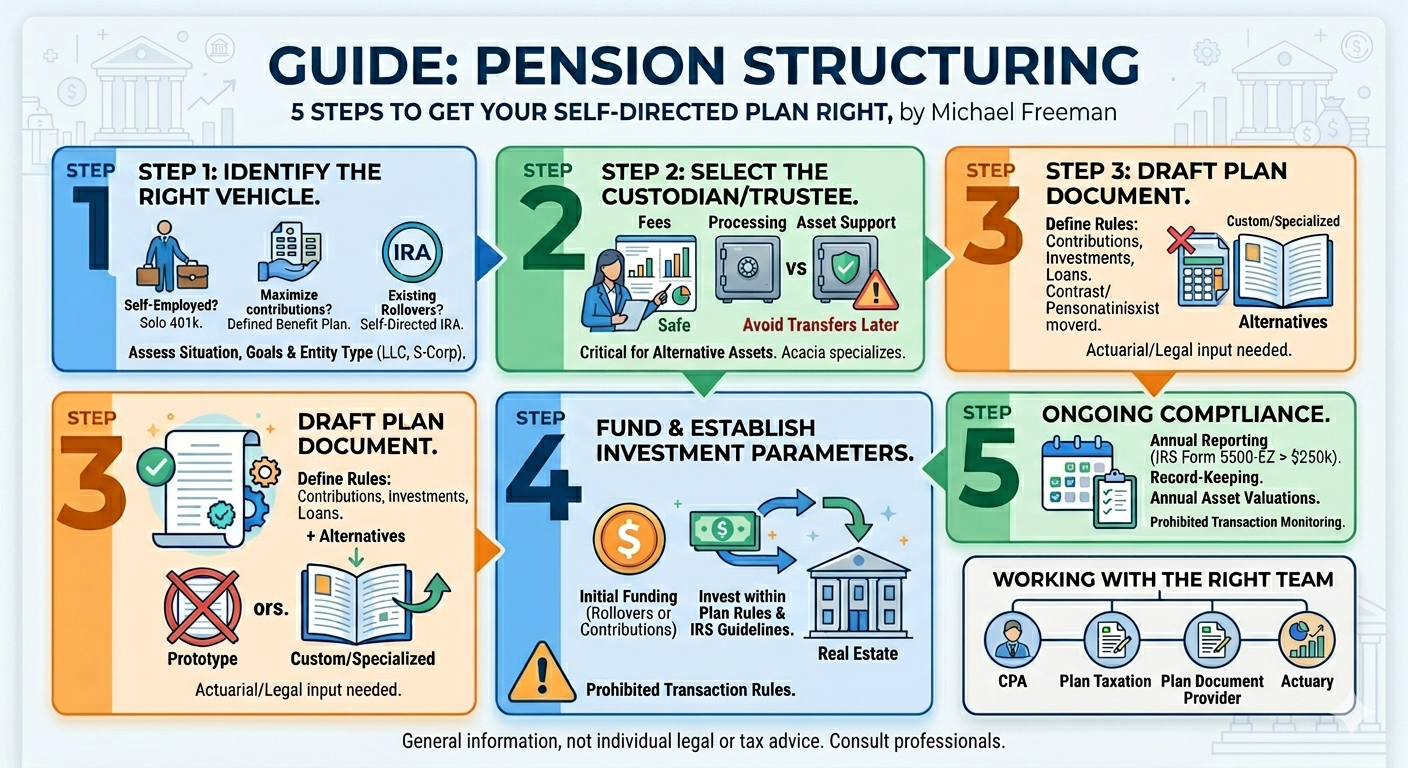
The first question is which type of plan fits the situation. For self-employed individuals with no full-time employees, the solo 401k is generally the starting point because of its contribution flexibility, loan provisions, and relative simplicity. For higher-income individuals, particularly those in their 50s who want to maximize deductible contributions over a shorter timeline, a defined benefit plan (or a combination of both) warrants serious consideration.
For those who already have an existing IRA from a prior employer rollover or previous contributions, a self-directed IRA may be the more accessible path. The contribution limits are lower than those of a solo 401 (k), but the asset flexibility for someone working with a specialized custodian is comparable.
The type of entity through which you operate also matters. A sole proprietorship, an LLC, an S-corporation, and a C-corporation each have different implications for how compensation is structured and, therefore, how contribution limits are calculated. This is not a trivial distinction; it can affect the maximum deductible contribution by tens of thousands of dollars annually.
Step Two: Select the Custodian or Trustee
For self-directed plans, this is a critical decision. Not every custodian will hold alternative assets, and among those that do, there are meaningful differences in fee structures, transaction processing times, available asset types, and operational support.
Acacia specializes in this area, providing custodial and administrative services for clients who need a structure that goes beyond conventional paper assets. Selecting the right custodian at the outset avoids the complications of transferring accounts later, which is both time-consuming and can create timing gaps in investment deployment.
Step Three: Draft the Plan Document
For a solo 401 (k), the plan document defines the plan’s rules, including contribution types (traditional, Roth, employer), loan provisions, investment options, and distribution rules. Not all plan documents are the same. A prototype plan from a brokerage may not permit alternative investments at all; a custom or specialized plan document from a provider experienced in self-directed plans will.
For a defined benefit plan, the plan document must also define the benefit formula, the vesting schedule, and the actuarial assumptions. This is not a document you draft yourself; it requires actuarial and legal input. But understanding what should be in it before engaging those professionals allows for a more efficient process.
Step Four: Fund the Plan and Establish Investment Parameters
Initial funding can come from new contributions, rollovers from existing accounts, or both. Rollovers from prior employer 401k plans and IRAs are generally tax-free if handled correctly, but the mechanics matter. A direct rollover (institution-to-institution) avoids the mandatory withholding that applies to indirect rollovers and eliminates the 60-day reinvestment deadline.
Once funded, investment decisions should be made within a clear framework of what the plan permits, what the custodian will process, and what the prohibited transaction rules require. For real estate purchases, the property must be titled in the name of the plan (e.g., “ABC Solo 401k Plan FBO John Smith”), not in the individual’s name. All expenses and income flow through the plan account.
Step Five: Ongoing Compliance
A self-directed plan is not a set-and-forget arrangement. Annual reporting requirements apply. For solo 401k plans with assets exceeding $250,000, IRS Form 5500-EZ must be filed each year. Defined benefit plans require annual actuarial certification. Both plan types require accurate record-keeping of all transactions, including documentation of how investment decisions were made and by whom.
If the plan holds real estate or other non-liquid assets, annual fair market valuation of those assets is required for plan administration purposes. Custodians will request this documentation; having an established process for obtaining it (appraisals, broker opinions, etc.) makes the annual cycle considerably less burdensome.
Prohibited transaction monitoring is an ongoing obligation, not a one-time review. As circumstances change (acquiring new businesses, bringing on family members as employees, engaging in new types of investments), the prohibited transaction analysis needs to be revisited.
Working With the Right Team
Pension structuring of this kind sits at the intersection of tax law, ERISA, investment management, and entity structuring. No single professional typically covers all of those areas with equal depth. The most effective approach involves a coordinated team: a CPA familiar with retirement plan taxation, an actuary if a defined-benefit plan is involved, a qualified plan document provider, and a custodian with genuine experience in alternative assets.
Acacia works within this framework, providing custodial and structural support that allows these plans to function as intended. For additional commentary on plan structuring and retirement capital strategy, MichaelIoane.com provides ongoing insights from a consulting perspective.
The information in this article reflects general structural principles and practical observations from consulting experience and is provided for educational purposes only. It should not be interpreted as individualized legal or tax advice.
Expand your knowledge of asset protection, business planning, taxation, and private trusts. Explore the available books on Amazon.