
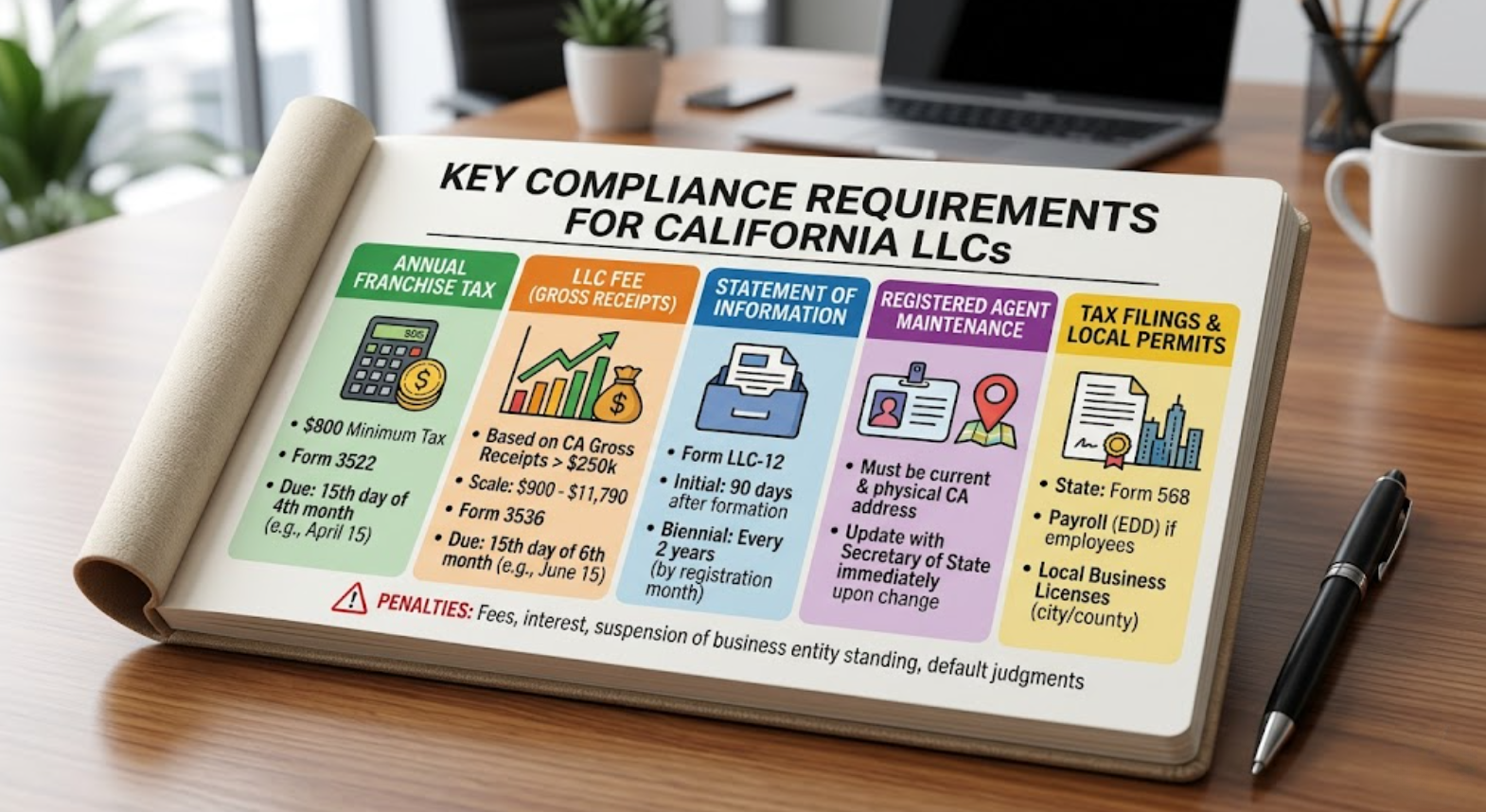

Key Compliance Requirements for California LLCs
By Michael Freeman | Acacia
California has a reputation as a high-compliance state for business entities, and that reputation is earned. The annual costs and ongoing filing obligations for California LLCs are more substantial than in most other states, and the penalties for noncompliance are real. Understanding what is required and when it is due is not optional; it is the cost of doing business in one of the country’s largest markets.
The Annual Franchise Tax
Every LLC doing business in California, whether formed in California or registered as a foreign LLC to do business here, owes a minimum annual franchise tax of $800. This tax is due even if the LLC had no income, no activity, and no profits during the year. It is a cost of maintaining the entity’s registration and good standing with the state.
The due date for the annual franchise tax is the 15th day of the fourth month of the LLC’s taxable year. For calendar-year LLCs, that is April 15. Payment is made to the California Franchise Tax Board using Form 3522. LLCs that fail to pay on time are subject to penalties and interest, and persistent nonpayment results in suspension of the entity’s good standing, which prevents the LLC from legally conducting business in California, entering into contracts in its own name, or maintaining a lawsuit.
The LLC Fee Based on Gross Receipts
In addition to the franchise tax, California imposes an additional fee on LLCs with California gross receipts exceeding $250,000. The fee scale is as follows: $900 for gross receipts from $250,000 to $499,999; $2,500 for gross receipts from $500,000 to $999,999; $6,000 for gross receipts from $1,000,000 to $4,999,999; and $11,790 for gross receipts of $5,000,000 and above.
This fee is reported on Form 3536 and is due by the 15th day of the sixth month of the taxable year, which is June 15 for calendar-year LLCs. An estimated fee payment is often required during the year based on projected gross receipts, with a true-up on the annual return. The LLC fee applies to total California gross receipts, not net income, which means an LLC with significant revenue, but thin margins may owe a substantial fee regardless of profitability.
The Statement of Information
As described in the formation article, the Statement of Information (Form LLC-12) must be filed within 90 days of formation and then every two years thereafter. The biennial filing window is based on the month in which the LLC was originally registered. California sends reminder notices, but missing the deadline regardless of whether a reminder is received results in a $250 late penalty.
The Statement of Information is not a complex form, but it requires current information about the LLC’s principal business address, registered agent address and name, and management structure. If any of this information has changed since the last filing, the Statement of Information must reflect the current information. An interim Statement of Information can also be filed at any time to update the record between the regular biennial filings.
Registered Agent Maintenance
The registered agent designation in the Secretary of State’s records must always reflect a current, reachable individual or service with a physical address in California. If the registered agent changes (for example, if a member who was serving as registered agent moves out of state), an updated filing must be made with the Secretary of State to designate the new agent.
Failure to maintain a current registered agent address results in service of process and official government correspondence being sent to an address that is no longer monitored. This can result in default judgments being entered against the LLC in lawsuits it did not know about, or compliance notices going unresponded to. Using a professional registered agent service eliminates this risk because the service maintains a stable address and ensures that documents are forwarded promptly.
Federal and State Tax Filings
For a single-member LLC treated as a disregarded entity, income and expenses are reported on the owner’s personal federal return (Schedule C for sole proprietors, or as part of the owner’s business income). For a multi-member LLC treated as a partnership, a federal Form 1065 partnership return is filed, with K-1s issued to each member reflecting their share of income and loss. If the LLC has elected S corporation or C corporation status, the corresponding corporate returns apply.
At the California level, the LLC files Form 568 (Limited Liability Company Return of Income) annually with the Franchise Tax Board. This return reports California income calculates the franchise tax and any LLC fee owed, and reconciles estimated payments already made. The due date for Form 568 is the 15th day of the third month after the close of the taxable year, which is March 15 for calendar-year LLCs.
California also requires LLCs with employees to register with the Employment Development Department, collect and remit payroll taxes, and file the applicable payroll returns on a regular schedule. This is a separate compliance track from the income tax and franchise tax obligations.
Local Business Licenses and Permits
Forming an LLC with the California Secretary of State does not in itself authorize the business to operate in any particular city or county. Most California cities and many counties require a local business license or business tax registration certificate for any business operating within their jurisdiction. The requirements and fees vary significantly by locality.
Certain industries require additional state-level licenses or permits that are entirely separate from the entity formation: contractors need CSLB licenses, real estate professionals need DRE licenses, financial services businesses may need DBO registration, and so on. Operating in a licensed profession or regulated industry without the required state license is a violation of California law regardless of the entity’s formation status.
Acacia provides compliance support for California LLCs, including registered agent services and formation documentation. For broader California entity compliance commentary, MichaelIoane.com is a useful ongoing reference.
The information in this article reflects general structural principles and practical observations from consulting experience and is provided for educational purposes only. It should not be interpreted as individualized legal or tax advice.
Expand your knowledge of asset protection, business planning, taxation, and private trusts. Explore the available books on Amazon.