
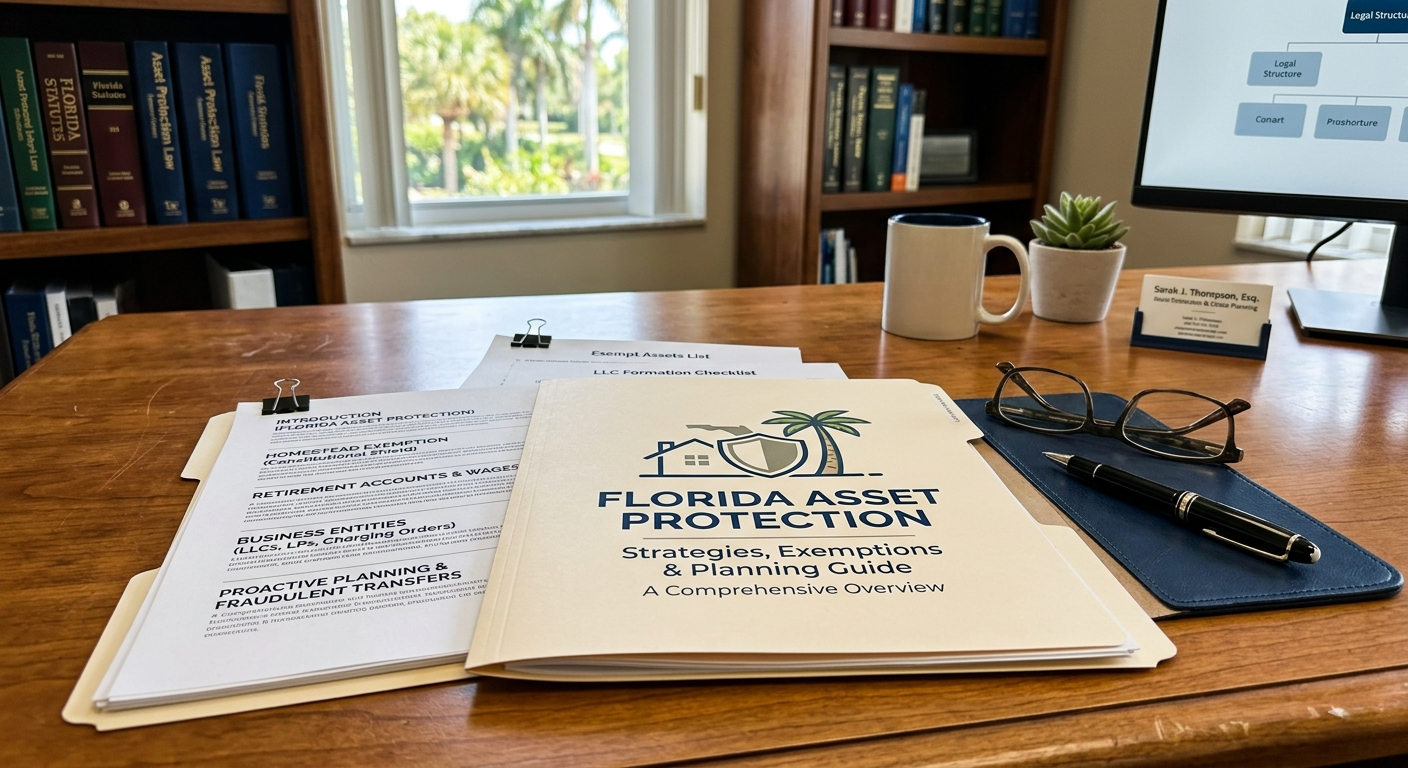

Florida Asset Protection
Florida has long been recognized as one of the more favorable states in the country for individuals and businesses looking to protect assets from creditors and legal exposure. That reputation is earned, not assumed. The state’s legal framework reflects a genuine legislative intent to allow residents to structure their affairs in ways that preserve what they have built, within defined and well-established boundaries.
When people talk about asset protection in Florida, they generally refer to a combination of state-specific exemptions, entity structuring, and strategic planning that work together to reduce vulnerability. None of these elements operates in isolation, and the strength of any plan depends on how well the pieces align with the person’s actual situation and goals.
What Florida Gets Right
A few statutory protections stand out as particularly significant. The Florida homestead exemption is among the strongest in the nation. Subject to certain acreage limits, a primary residence is generally shielded from forced sale to satisfy most creditor claims. This is not a loophole. It is codified in the Florida Constitution, which gives it durability that few other protections can match.
Florida also provides strong protection for assets held in certain retirement accounts, annuities, life insurance cash value, and wages for heads of household. These are not obscure provisions. They are established tools that a knowledgeable advisor will factor into any serious planning conversation.
The Role of Business Entities
Beyond individual exemptions, the use of properly structured business entities adds another layer of protection. Florida limited liability companies and limited partnerships can be effective when used appropriately. The key word is appropriate. An LLC that is poorly documented, underfunded, or operated without real separation from the individual owner provides much weaker protection than one that is genuinely treated as a separate business.
Creditors’ charging order protections in Florida are worth noting as well. Under Florida law, a creditor of an LLC or limited partnership member generally cannot seize ownership interest directly; the creditor may only obtain a charging order, which limits their ability to access distributions. This creates a meaningful barrier, though it is not absolute and should not be treated as a complete solution on its own.
Planning Ahead Matters
The most important point about Florida asset protection is timing. Structures put in place before a claim arises carry far more weight than those assembled after the fact. Florida’s fraudulent transfer laws, like those in most states, are designed to unwind transfers made with intent to hinder, delay, or defraud creditors. A plan built proactively and maintained with proper documentation is in a fundamentally different position than one constructed in response to a pending lawsuit.
Working with advisors who understand both the legal framework and the practical reality of implementation is essential. Florida asset protection planning is a real discipline with real results when done correctly and a source of real problems when done carelessly.
Disclosure: The information in this article reflects general structural principles and practical observations from consulting experience and is provided for educational purposes only. It should not be interpreted as individualized legal or tax advice.
Expand your knowledge of asset protection, business planning, taxation, and private trusts. Explore the available books on Amazon.