

Asset Protection in Florida
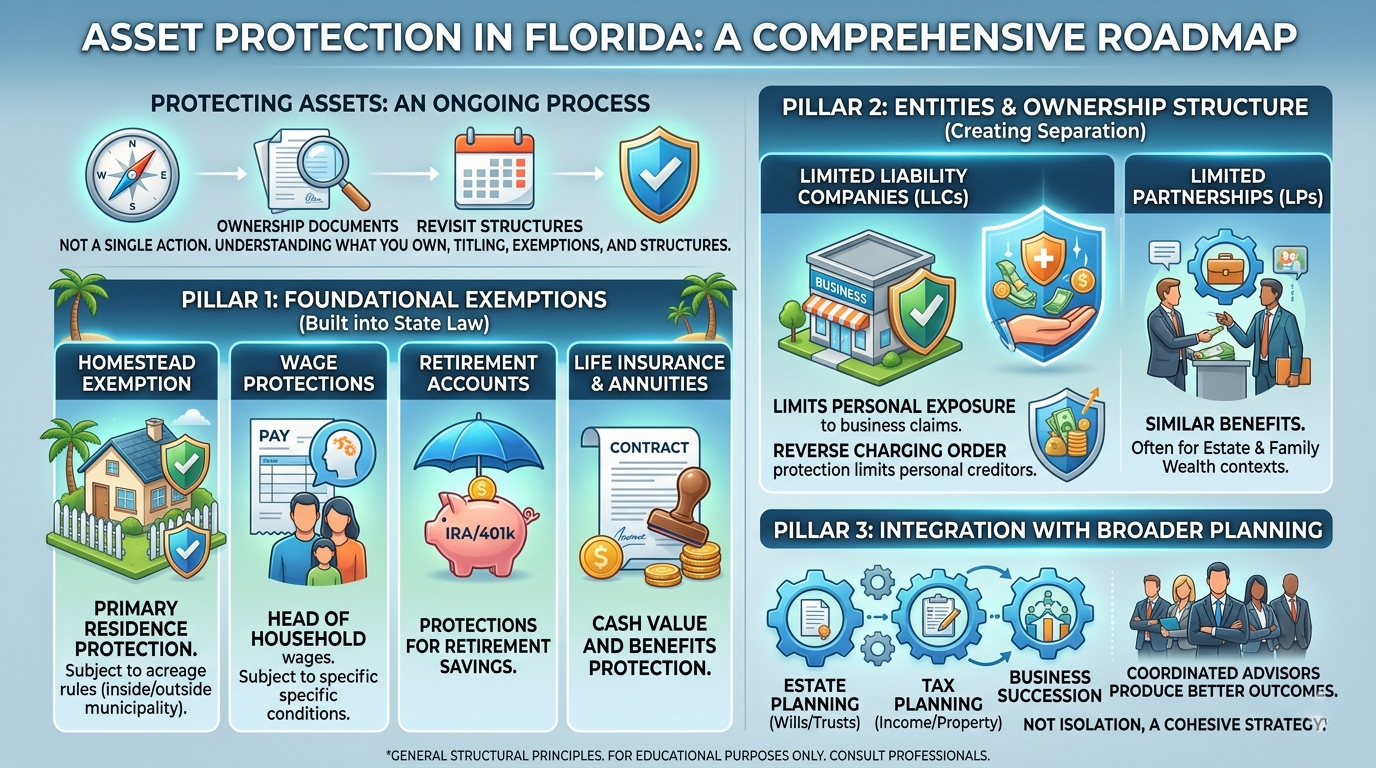
Protecting assets in Florida is not a single action. It is an ongoing process that involves understanding what you own, how it is titled, what exemptions apply, and what structures make sense given your circumstances. For business owners, professionals, real estate investors, and high-net-worth individuals, the question is not whether to plan but how to do so effectively.
Florida’s legal environment supports thoughtful asset protection planning, but it requires more than a basic LLC or a single conversation with an attorney. The people who get real results from this process are those who approach it deliberately and who revisit their structures as their situations evolve.
Exemptions as a Foundation
Florida’s statutory exemptions form the baseline of any asset protection conversation. The homestead exemption, wage protections for heads of household, retirement account protections, and life insurance cash value rules provide Florida residents with meaningful tools built directly into state law. Understanding which exemptions apply to your specific assets and how to properly position yourself to benefit from them is the starting point.
It is worth noting that these exemptions have conditions and limitations. The homestead exemption, for instance, applies to a primary residence and is subject to acreage rules depending on whether the property is inside or outside a municipality. The wage exemption for heads of household has its own requirements. Getting the details right matters.
Entities and Ownership Structure
How assets are owned is often as important as what assets you own. Florida limited liability companies are a common tool in asset protection planning, and for good reason. When properly established and maintained, an LLC creates a legal separation between the business and its members, which can limit personal exposure to business-related claims. The reverse is also possible; charging order protections can limit a personal creditor’s ability to reach business assets held in an LLC.
Limited partnerships offer similar benefits and are sometimes preferred in certain estate and family wealth contexts. The specific structure that makes sense depends on the type of assets involved, the nature of the risks you face, and the broader goals of your planning.
Integration with Broader Planning
Asset protection in Florida rarely stands alone. It connects naturally to estate planning, tax planning, and business succession conversations. A structure that makes sense from a creditor protection standpoint may also have implications for how assets pass to the next generation or how income is reported and taxed. Advisors who can see across these disciplines tend to produce better outcomes than those who approach each area in isolation.
The goal is not to complicate things unnecessarily. It is to build a structure that holds up over time, is properly documented, and reflects how you actually operate your life and your business. Florida provides the tools. The quality of the plan depends on how thoughtfully those tools are used.
Disclosure: The information in this article reflects general structural principles and practical observations from consulting experience and is provided for educational purposes only. It should not be interpreted as individualized legal or tax advice.
Expand your knowledge of asset protection, business planning, taxation, and private trusts. Explore the available books on Amazon.