

Guide: Florida Asset Protection
Florida offers a genuinely strong environment for asset protection planning, but the effectiveness of any strategy depends on avoiding the mistakes that undermine even well-intentioned plans. Understanding the common risks and how to address them is as important as knowing which tools to use.
This guide covers the core concepts, the most frequently encountered problems, and the practical principles that separate plans that work from those that do not.
Starting with the Right Foundation
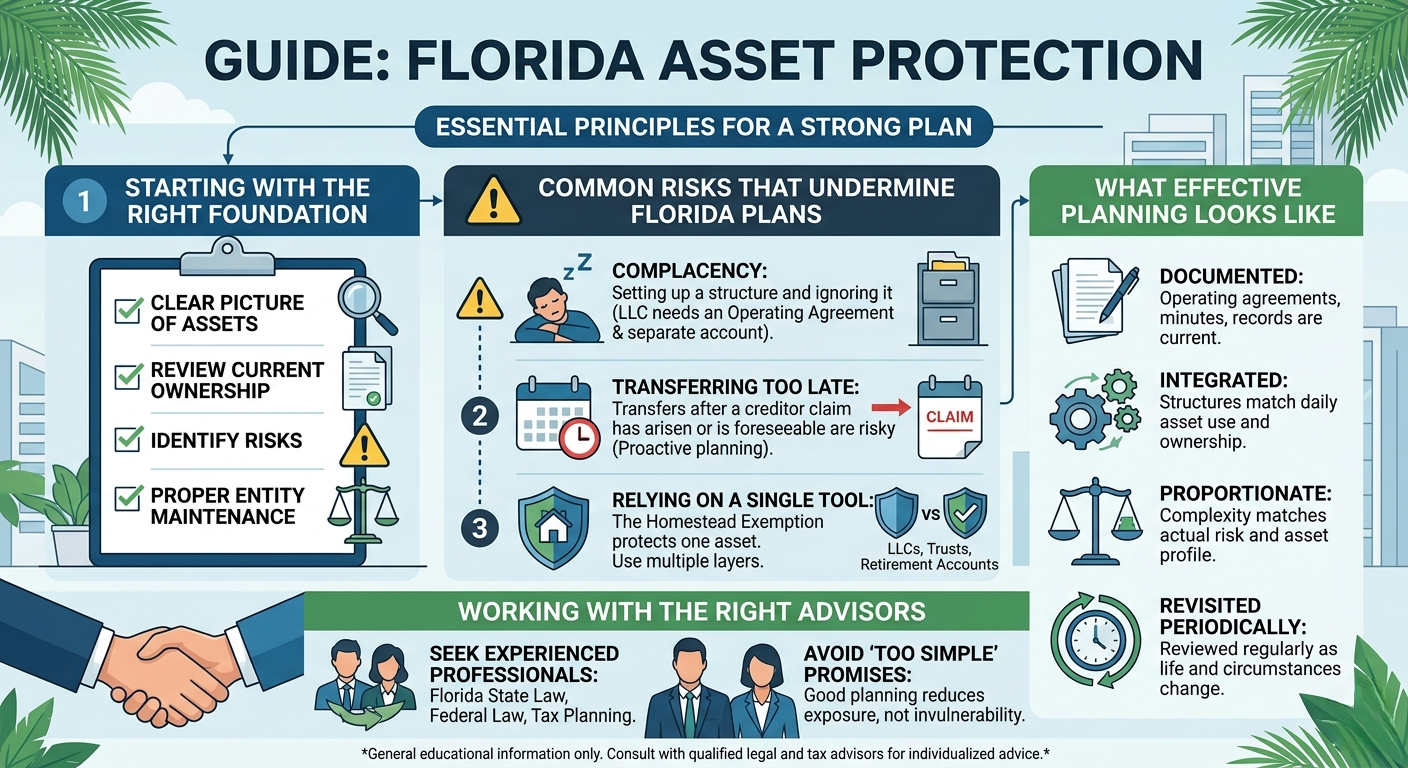
The foundation of any Florida asset protection plan is a clear picture of what you own, how it is owned, and what risks you face. That sounds straightforward, but many people begin the planning process without that clarity. Assets owned in the wrong name, entities that were set up but never properly maintained, or structures that made sense at one point but no longer align with current circumstances all create vulnerabilities.
Before layering in any new structures, a thorough review of the current picture is essential. This includes how real property is titled, whether existing LLCs are properly documented and operated, what exemptions currently apply, and whether any recent transactions might raise questions under fraudulent transfer analysis.
Common Risks That Undermine Florida Plans
The most common risk is complacency. People who set up a structure, file the paperwork, and then treat it as done tend to find themselves exposed when something goes wrong. An LLC that has no operating agreement, no separate bank account, and no documented decision-making history is not functioning as a real legal entity. Courts and creditors will look at how an entity was actually operated, not just whether it was registered.
A second common risk is transferring assets too late. As discussed in the legal framework piece, transfers made after a creditor claim has arisen or is reasonably foreseeable are subject to challenge. The window for effective planning closes faster than most people expect, which is why proactive planning rather than reactive planning produces better results.
A third risk involves relying on a single tool. The homestead exemption is powerful, but it protects one asset. An LLC provides entity-level separation, but it has limits. Retirement account protections apply to specific types of accounts. A comprehensive plan uses multiple layers that work together, reducing the likelihood that any single point of failure results in complete exposure.
What Effective Planning Looks Like
Effective asset protection planning in Florida is characterized by a few consistent qualities. It is documented; operating agreements, minutes, transfer records, and supporting schedules exist and are current. It is integrated; the protection structures are consistent with how assets are actually used and owned in everyday life. It is proportionate; the complexity of the structure matches the actual risk and asset profile involved.
It is also revisited periodically. Life changes. Businesses grow or restructure. Real estate portfolios change. Family circumstances shift. A plan built five years ago may not reflect where things stand today, and a review process that keeps the structure current is part of what makes protection durable over time.
Working with the Right Advisors
The quality of the advice you receive matters as much as the tools you use. Florida asset protection planning sits at the intersection of state law, federal law, tax planning, and practical business management. Advisors who understand how these areas interact and who have real experience implementing these structures are worth seeking out.
Be cautious of plans that sound too simple, or that promise complete protection from any future claim. No structure eliminates all risk, and anyone who suggests otherwise is not being straight with you. Good planning reduces exposure meaningfully and creates defensible positions; it does not create invulnerability.
Florida’s legal environment supports serious and well-constructed asset protection planning. The framework is there. Using it effectively is a matter of working deliberately, staying current, and treating the process as an ongoing commitment rather than a one-time task.
Disclosure: The information in this article reflects general structural principles and practical observations from consulting experience and is provided for educational purposes only. It should not be interpreted as individualized legal or tax advice
Expand your knowledge of asset protection, business planning, taxation, and private trusts. Explore the available books on Amazon.