

How Privacy Is Built Into Structures: A Complete Guide
Many business owners and investors are surprised to learn how much personal information becomes public. This occurs simply by forming a business or buying property in their own name.
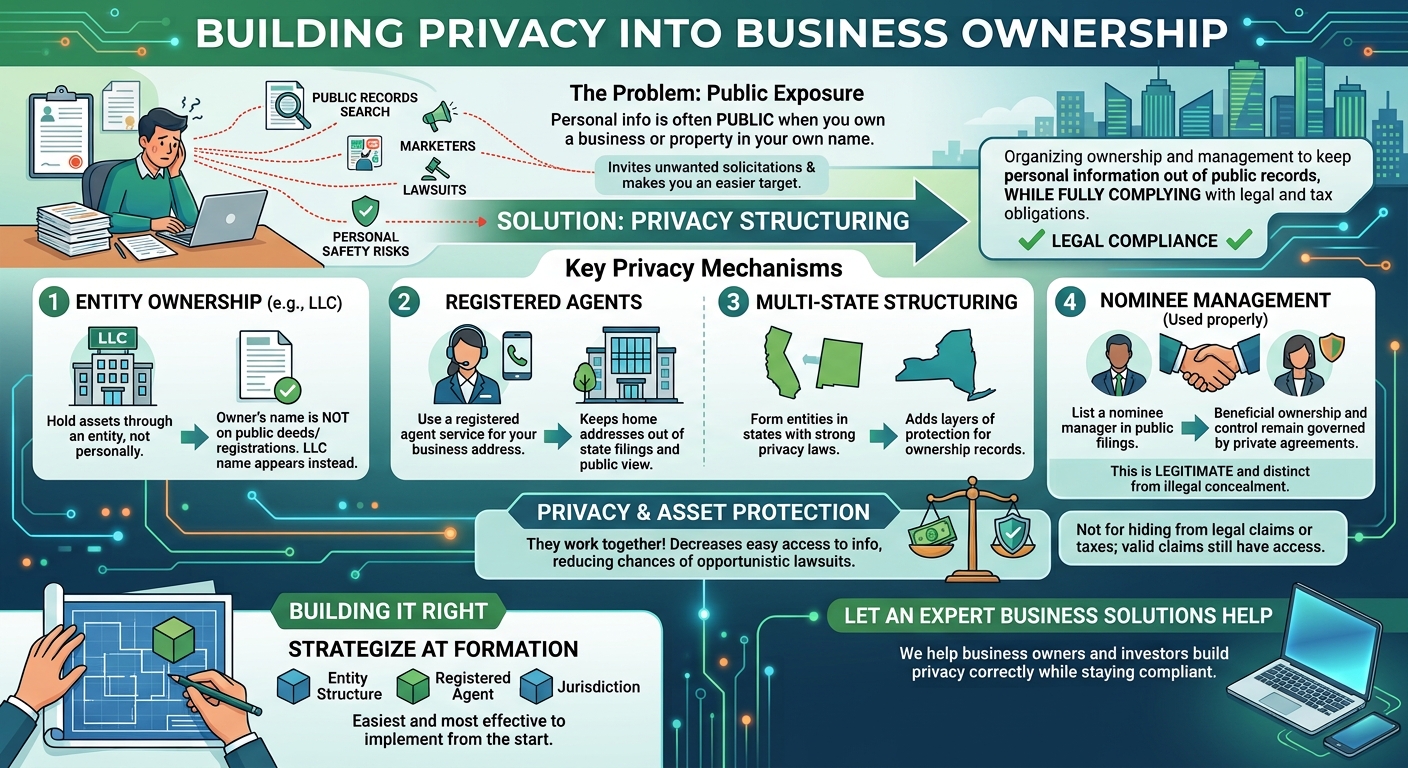
Privacy structuring is the practice of organizing ownership and management. Moreover, it keeps personal information out of public records. It also fully complies with legal and tax obligations.
Why Privacy Matters for Business Owners and Investors
If a business or property is registered in an owner’s personal name, that information becomes public. The data is searchable by anyone, including opposing parties, marketers, and others with less legitimate aims.
This exposure invites unwanted solicitation. It can make an owner an easier target for frivolous lawsuits. It also reduces personal safety and privacy in situations demanding anonymity. This is a concern for Privacy structuring. Addressing it helps protect owners’ reputations and peace of mind.
Privacy structuring is not about hiding assets from legitimate creditors, courts, or tax authorities. Reputable structuring always keeps ownership fully compliant with tax reporting and legal disclosure requirements. Thus, it keeps ownership information out of easily searchable public records. Personal details are not the first thing anyone sees when they look up a business or property.
How Structures Create Privacy structuring
Privacy is typically built in through a few key mechanisms.
Entity ownership instead of personal ownership. Holding property or business interests through an LLC keeps the owner’s name off the property deed. The LLC’s name appears in public records instead.
Registered agents. A registered agent service shows a business address in state filings. Thus the owner’s home address is not in state filings. This keeps personal addresses out of public business records.
Multi state structuring. Some states offer stronger privacy protections than others for LLC ownership records. Structuring entities across states with favorable privacy laws can add another layer of protection.
Nominee management, used properly. In some structures, a nominee manager or officer is listed in public filings. Beneficial ownership and control remain governed by private agreements between the parties. This is a legitimate and common practice, distinct from concealment intended to evade legal obligations.
Privacy and Asset Protection Work Together
However, privacy structuring often works hand in hand with asset protection planning.
A determined creditor or opposing party can generally still uncover ownership information through legal discovery.
There are court orders or other legitimate legal channels.
Privacy structuring is not designed to defeat a valid legal claim.
It reduces casual, easy access to that information.
This reduction can meaningfully lower the odds of opportunistic lawsuits.
It also lowers overall exposure.
Building Privacy the Right Way
Effective privacy structuring is built at the time of formation, using the right combination of entity structure, registered agent services, and jurisdiction selection. Retrofitting privacy onto an existing structure is possible, but it is generally easier and more effective to build it in from the start.
Let Acacia Business Solutions Help Structure Your Privacy
Acacia Business Solutions helps business owners and investors build privacy into their structures the right way, keeping personal information out of easy public reach while remaining fully compliant with all legal and tax requirements.
Learn more about our nominee services or speak with our team about a complete asset protection review. Visit Acacia Business Solutions to schedule a consultation and start protecting your privacy the right way.
Expand your knowledge of asset protection, business planning, taxation, and private trusts. Explore the available books on Amazon.