

The Essential Guide to Public Records Exposure
Most people never think about how much of their personal information sits in public records until they search for themselves. For example, many people discover the Public records privacy exposure when they look up their own records.
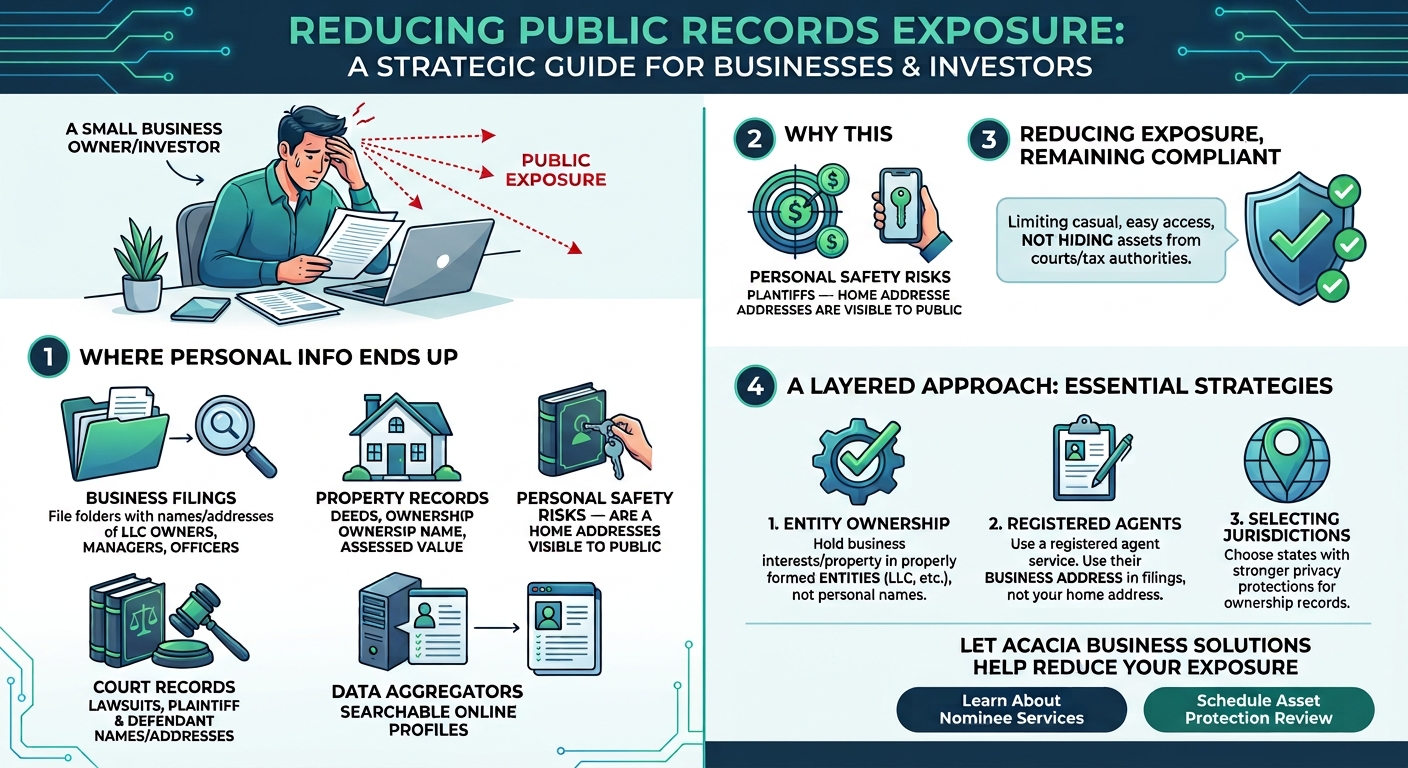
Where Personal Information Ends Up in Public Records
Business formation filings. When an LLC or corporation is formed, most states require the names and addresses of owners. Additionally, these details are then listed in publicly accessible filings. This creates Public records privacy exposure.
Property records. Buying real estate in a personal name places that owner’s name directly on the deed, which becomes part of the county’s public property records. This is often paired with the property’s assessed value, creating a detailed public snapshot of what someone owns and where.
Court records. Any lawsuit, whether as a plaintiff or defendant, generally becomes part of the public court record, along with the parties’ names and addresses.
Data aggregators. Public records from business filings, property records, and court documents are frequently scraped by data aggregator websites, which compile this information into easily searchable profiles, often including home addresses and property values.
Why This Exposure Matters
This level of exposure creates real risks beyond simple inconvenience. Additionally, business owners with visible wealth may attract lawsuits. Plaintiffs and their attorneys often research a defendant’s assets before deciding whether a claim is worth pursuing. Public records privacy exposure is a concern for business owners. Publicly listed home addresses raise safety concerns for owners who deal with the public or manage rentals.
Reducing Exposure Without Breaking the Law
Reducing this kind of exposure does not mean hiding from legal obligations. Courts, tax authorities, and law enforcement generally retain the ability to access ownership information through legitimate legal channels regardless of how a structure is set up. What thoughtful structuring accomplishes is limiting casual, easy access to personal information for everyone else.
This typically involves holding property and business interests through properly formed entities rather than personal names. It uses registered agent services so a business address appears in filings instead of a home address. It also selects jurisdictions with stronger privacy protections for ownership records where appropriate.
A Layered Approach to Reducing Exposure
Personal information can end up in public records through several channels.
Additionally, a comprehensive approach to reducing exposure usually involves more than one step.
Business formation, property ownership, and everyday transactions present opportunities for personal information to become public. Each one benefits from its own layer of privacy planning.
Let Acacia Business Solutions Help Reduce Your Exposure
Understanding where personal information becomes public is the first step. Additionally, Acacia Business Solutions helps clients build structures that meaningfully reduce that exposure. They use legitimate, fully compliant tools designed for privacy, not concealment from legal obligations.
Learn more about our nominee services or talk with our team about a complete asset protection review to reduce your public exposure. Visit Acacia Business Solutions to schedule a consultation today.
Expand your knowledge of asset protection, business planning, taxation, and private trusts. Explore the available books on Amazon.