

Proven Ways to Mitigate Compliance Risks
The flexibility of a checkbook IRA is its core value. That versatility makes compliance essential for the account.
Because the account holder has direct control over the LLC’s bank account, crossing a line is easy. This is why understanding these Checkbook IRA compliance risks is essential to keeping the structure intact.
Prohibited Transactions
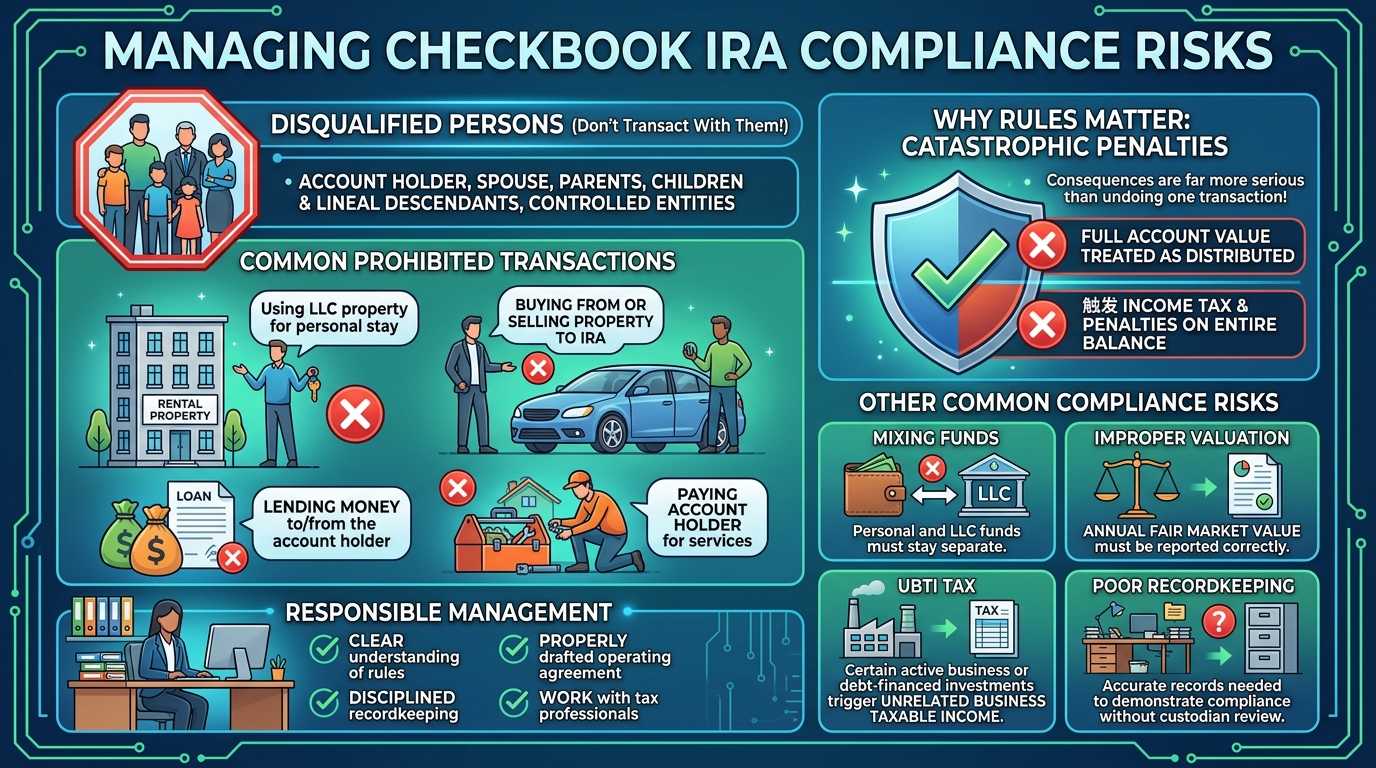
The most significant compliance risk in a checkbook IRA involves what the IRS calls prohibited transactions, meaning transactions between the IRA and certain related parties, known as disqualified persons. This generally includes the account holder, their spouse, parents, children, and certain other family members, along with entities those individuals control.
Common prohibited transactions include the account holder personally using property owned by the IRA LLC, such as staying at a rental property the LLC owns, buying property from or selling property to the IRA using personal funds, lending money between the IRA and the account holder personally, and paying the account holder or a disqualified family member for services related to LLC investments.
Why These Rules Matter So Much
If a prohibited transaction occurs, the consequences can be severe. In many cases, the IRS can treat the entire IRA as distributed as of the first day of the year in which the prohibited transaction occurred, triggering income tax on the full value of the account, along with potential penalties if the account holder is under retirement age. This is a far more serious consequence than simply undoing a single bad transaction, which makes understanding and avoiding these rules critical.
Other Common Compliance Risks
Mixing personal and LLC funds. Using the LLC’s bank account for personal expenses, or personal funds for LLC investments, blurs the line between the account holder and the IRA in a way that can raise compliance concerns.
Improper valuation reporting. IRA custodians are required to report the fair market value of IRA assets annually. Checkbook IRA structures require the account holder to provide accurate valuations for LLC held assets, and failing to do so properly can create compliance issues with the custodian and the IRS.
Unrelated business taxable income. Certain types of investments, such as those involving debt financed property or active business operations, can trigger unrelated business taxable income within an IRA, which may require separate tax filings and payments even within a tax advantaged account.
Poor recordkeeping. Because the account holder manages the LLC directly, there is no custodian reviewing each transaction in real time. This makes careful recordkeeping essential, since the burden of demonstrating compliance falls on the account holder if the structure is ever reviewed.
Managing These Risks Responsibly
The flexibility of a checkbook IRA is a genuine advantage, but it comes with genuine responsibility. Account holders need a clear understanding of prohibited transaction rules, disciplined recordkeeping, and a properly drafted operating agreement that reflects these requirements from the outset. Many investors also work with tax professionals on an ongoing basis to review transactions and valuations, particularly for more complex investments.
Let Acacia Business Solutions Help You Stay Compliant
Setting up a checkbook IRA correctly is only part of the picture. Acacia Business Solutions helps investors understand the compliance requirements that come with this structure, so the flexibility it offers does not come at the cost of the IRA’s tax advantaged status. Checkbook IRA compliance risks should be considered throughout the setup and ongoing operation.
Learn more about our IRA services or speak with our team about setting up your structure the right way. Visit Acacia Business Solutions to schedule a consultation today.
Expand your knowledge of asset protection, business planning, taxation, and private trusts. Explore the available books on Amazon.