

How to Effortlessly Operate Across Multiple States
What it means for a multi-state LLC to operate in another state.
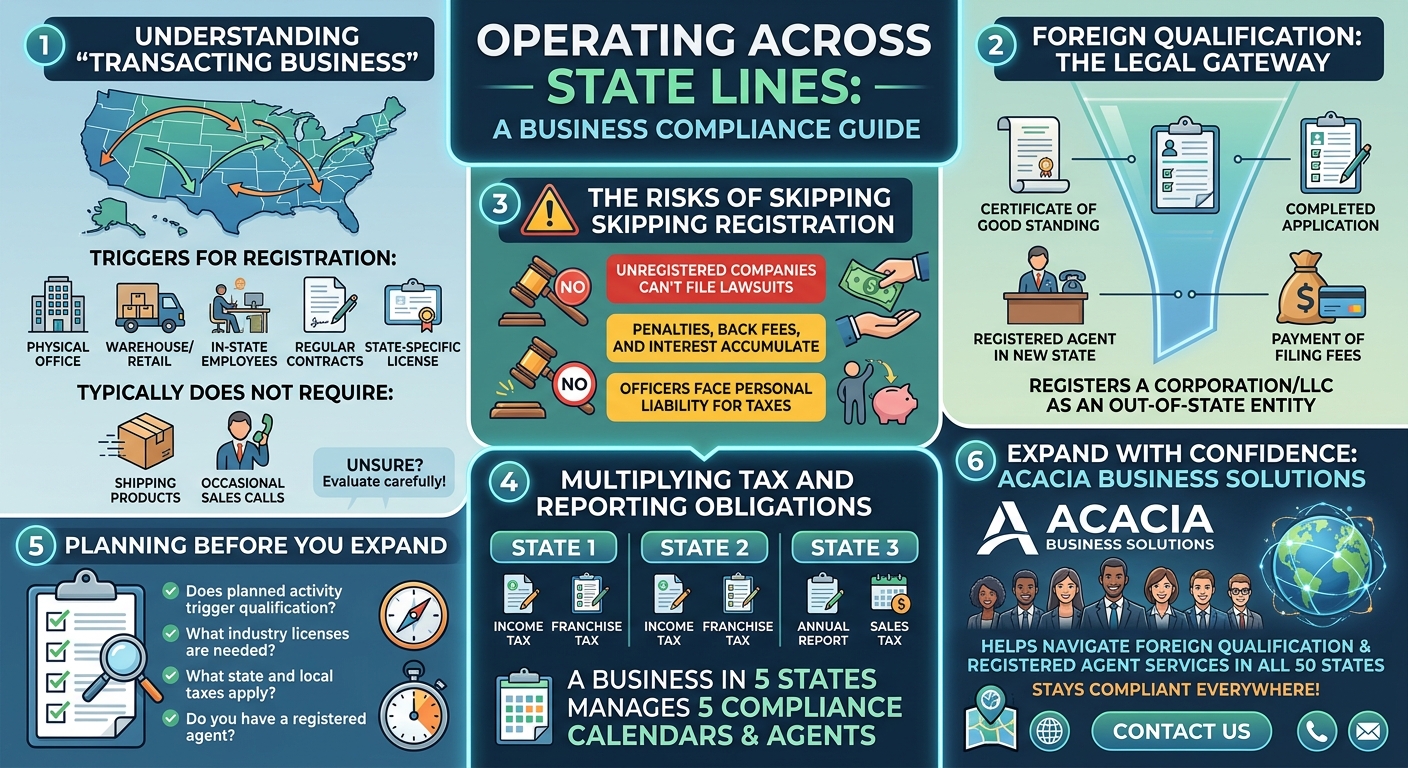
Additionally, most states use the concept of transacting business to determine whether a company must register there.
Activities that typically trigger this requirement include the following.
- Maintaining a physical office, warehouse, or retail location in the state
- Having employees who work or reside in the state
- Regularly entering into contracts within the state
- Holding a state specific license required to perform the work
Simply shipping products to customers in another state or making occasional sales calls usually does not
require registration, but the line can be unclear. Businesses that are unsure whether their activities
cross this threshold should evaluate their specific situation carefully.
Foreign Qualification: The Legal Gateway
When a business is formed in one state and decides to operate in another, it must file for foreign
qualifications in that new state. This process registers the existing corporation or LLC as an out of state
entity authorized to conduct business there. Foreign qualifications typically require the following: - A certificate of good standing from the state of formation
- A completed application for authority filed with the new state
- A registered agent located in the new state
- Payment of filing fees, which vary by state
Why Skipping This Step Is Risky
Operating in a state without proper registration can lead to significant consequences. Many states bar
unregistered companies from filing lawsuits in their courts until the business becomes compliant.
Penalties, back fees, and interest can also accumulate longer a business operates without registering. In
some cases, the officers responsible may face personal liability for taxes owed by the unregistered
entity.
Tax and Reporting Obligations Multiply
Each state where a business is registered typically requires its own set of ongoing filings. For a multi-state LLC, filing requirements vary by state.
This can include state income tax returns, franchise taxes, annual reports, and sales tax registration. Deadlines can be challenging to manage.
A business operating in five states may face five sets of deadlines. It also requires five registered agents and five distinct calendars.
Planning before expansion helps. Businesses considering expansion should evaluate the following before entering a new state.
- Whether the planned activities in the new state trigger a foreign qualification requirement
- What licenses or permits are required for the specific industry
- What state and local tax obligations will apply
- Whether a registered agent is already available in that state or needs to be established
Expanding into new states does not need to be complicated. Acacia Business Solutions helps businesses
navigate foreign qualification and registered agent services in all 50 states, so your business stays
compliant everywhere it operates. Contact our team to plan your next expansion with confidence.
Expand your knowledge of asset protection, business planning, taxation, and private trusts. Explore the available books on Amazon.