

The Essential Guide to Understanding Licensing Requirements
Licensing and regulatory basics
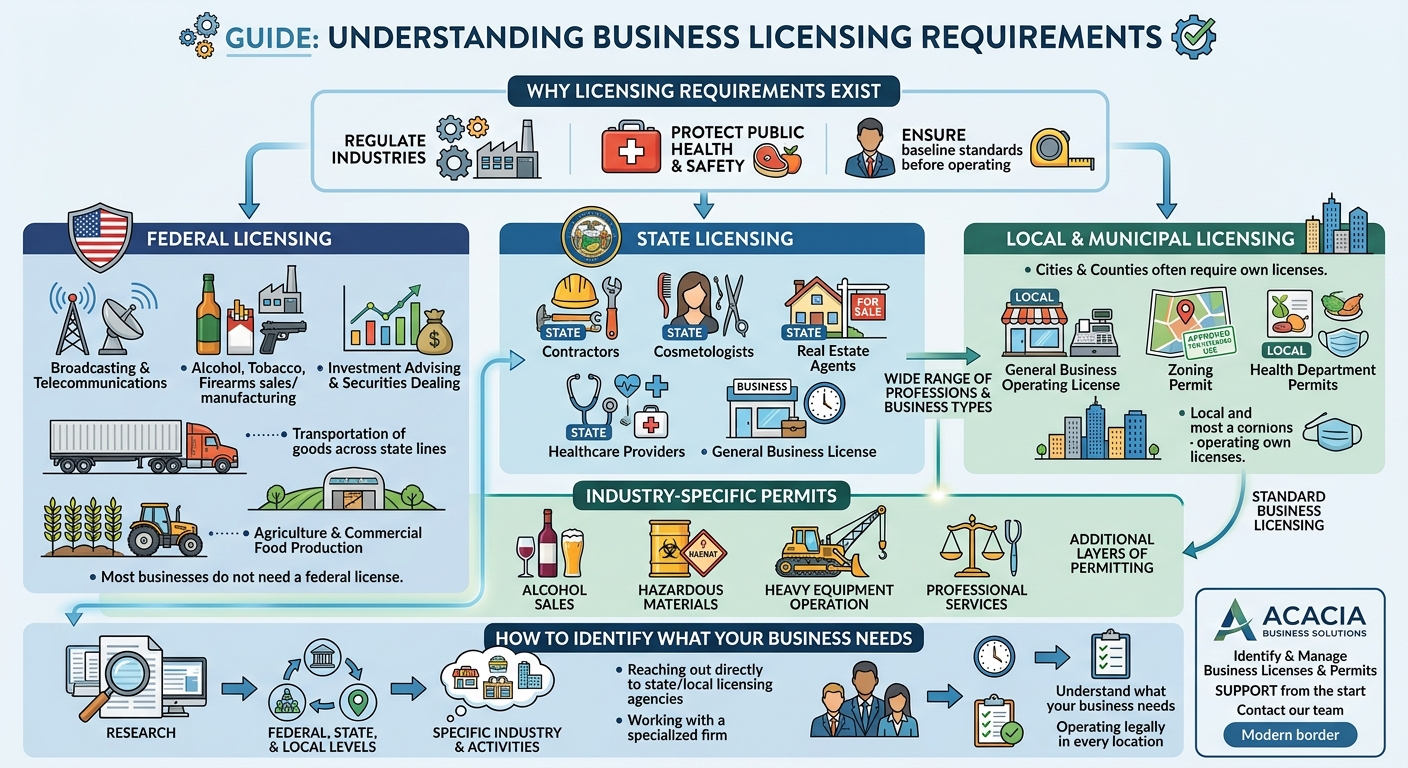
Licenses and permits allow government agencies to regulate industries, protect public health and safety, and ensure businesses meet baseline standards before operating. Understanding business licensing requirements helps businesses plan compliance and protect customers.
A restaurant needs a health permit. For the same reason, a contractor needs a trade license to confirm the business meets requirements that protect customers and the public.
Most businesses do not need a federal license, but certain regulated industries do. Federal licensing typically applies to businesses involved in the following:
- Broadcasting or telecommunications
- Alcohol, tobacco, or firearms sales and manufacturing
- Investment advising or securities dealing
- Transportation of goods across state lines
- Agriculture and food production at a commercial scale
State Licensing
State licenses are far more common and apply to a wide range of professions and business types.
Examples include professional licenses for occupations such as contractors, cosmetologists, real estate
agents, and healthcare providers, as well as general business licenses required simply to operate within
the state.
Local and Municipal Licensing
Cities and counties frequently require their own business licenses or permits, separate from state
requirements. These can include a general business operating license, a zoning permit confirming the
location is approved for the intended use, and health department permits for businesses handling food.
Industry Specific Permits
How to Identify What Your Business Needs
Certain industries face additional layers of permitting beyond general business licenses. A business that sells alcohol, handles hazardous materials, or operates heavy equipment will typically need permits specific to that industry. Additional permits apply on top of standard business licensing requirements.
Because requirements vary so significantly, businesses should research licensing needs at the federal, state, and local level. This should be done for every location where they operate, based on their specific industry and activities.
Reaching out directly to state and local licensing agencies can help. Or work with a licensing research firm to avoid missing a requirement.
Understanding what your business needs is the first step toward operating legally in every location.
Acacia Business Solutions helps businesses identify and manage their licenses and permits from the start.
Contact our team to make sure your business is properly licensed.
Expand your knowledge of asset protection, business planning, taxation, and private trusts. Explore the available books on Amazon.