

How to Master Business Licensing: Essential Guide
Licensing steps overview
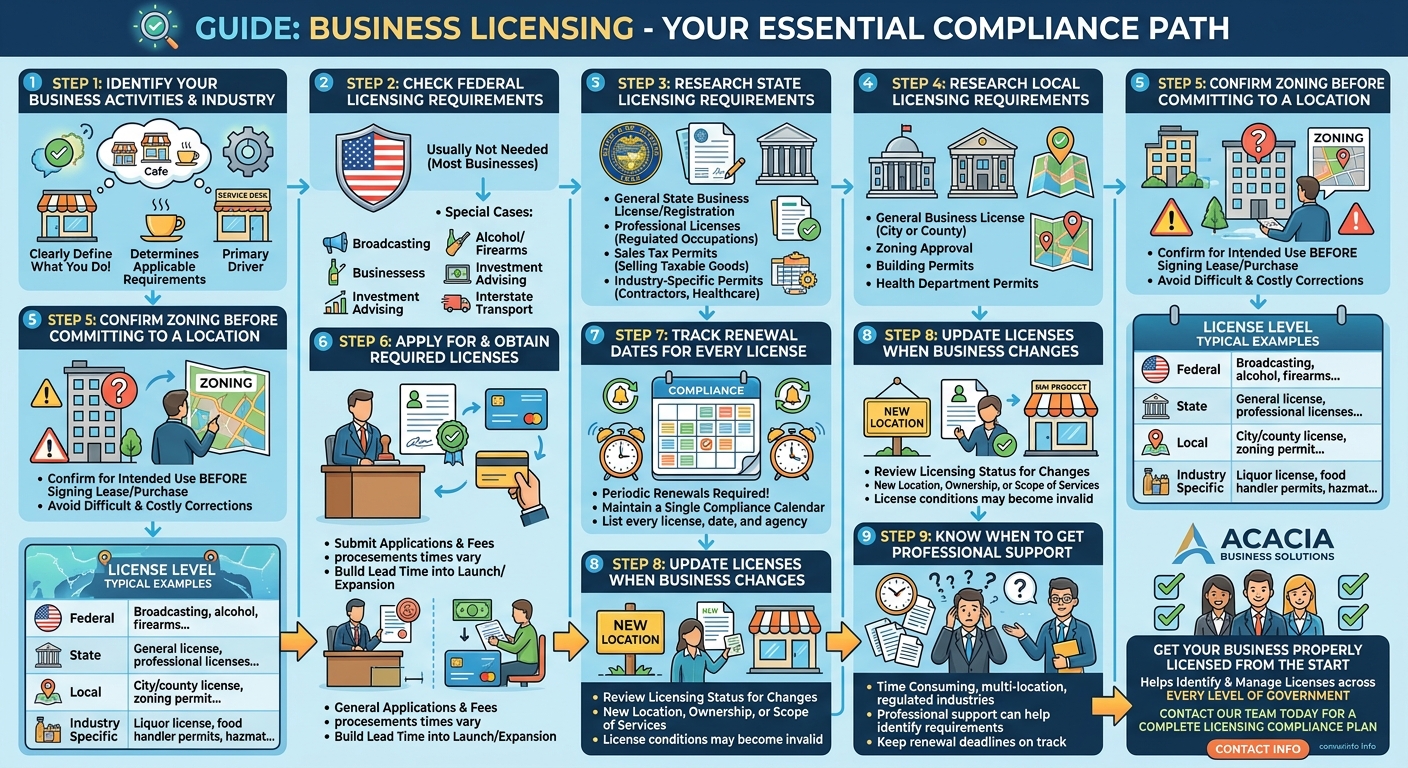
Identify your business activities and the industry you operate in. Licensing requirements are driven by what the business does and where it operates. Begin by clearly defining the activities, because this determines which federal, state, and local requirements apply. Gather details about product lines, services offered, and the locations where you operate to refine the scope of regulation.
Most businesses do not need a federal license, but some industries do. Examples include broadcasting, alcohol or firearms sales, investment advice, and interstate transportation. Confirm whether your activities fall into a federally regulated category by reviewing official guidance and noting any federal permissions that may apply to your operations.
State licensing requirements vary, but states commonly require the following: professional credentials, business registrations, and sector-specific permits. In many cases, fees and renewal timelines apply, and some licenses depend on business location or the number of employees. For a complete overview, refer to a business licensing guide.
- A general state business license or registration
- Professional licenses for regulated occupations
- State sales tax permits for businesses selling taxable goods or services
- Industry specific state permits, such as for contractors or healthcare providers
Step 4: Research Local Licensing Requirements
Cities and counties often require their own general business license. They also require zoning approval, building permits, and health department permits where applicable. Research these requirements separately for each physical location where the business operates. Step 5: Confirm zoning before committing to a location. Before you sign a lease or buy property, confirm the location is zoned for the intended business use. Correcting zoning problems after you sign a lease is harder and costlier than confirming approval beforehand. Step 6: Apply for and obtain required licenses. Submit applications to each relevant agency, along with any required fees and documentation. Processing times vary widely by jurisdiction and license type. Build sufficient lead time into your launch or expansion timeline. Step 7: Track renewal dates for every license. Most licenses and permits require periodic renewal. Keep a single compliance calendar listing every license, its renewal date, and the agency responsible. Relying on renewal notices alone is risky. License levels include federal, broadcasting, alcohol and firearms, and investment.
Additionally, it covers advising interstate transport.
General business licenses and professional licenses apply.
A sales tax permit is required.
A local city or county business license and zoning permit are required.
A health department permit is required.
Licenses such as industry-specific liquor licenses, food handler permits, and hazardous materials approvals are required.
The materials permit.
Business licensing guide
Review licensing status whenever the business changes location, ownership, or scope of services.
Changes in circumstances can invalidate the license.
Research licensing across federal, state, and local levels can take time, especially for businesses in multiple locations or regulated industries.
Professional support helps identify requirements you might miss and keeps renewal deadlines on track.
Get your business properly licensed from the start.
Acacia Business Solutions helps identify and manage business licenses and permits across every level of government.
Contact our team today to build a complete licensing compliance plan for your business.
Expand your knowledge of asset protection, business planning, taxation, and private trusts. Explore the available books on Amazon.