
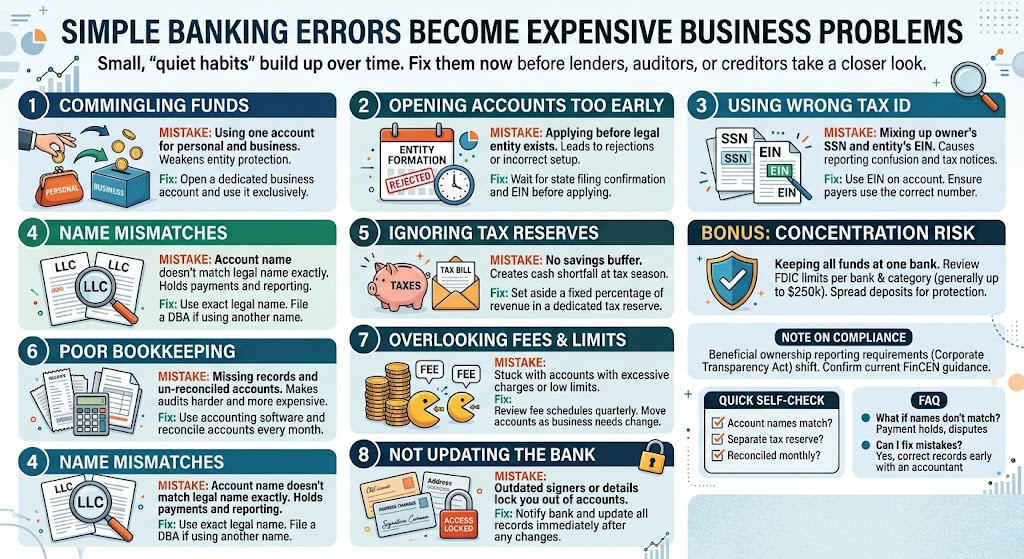

Common Banking Mistakes
Small banking errors become expensive business problems.
Most banking mistakes are not dramatic. They are quiet habits that build up: an unmatched name, a shared debit card, a missing receipt, a tax bill nobody saved for. Each one seems minor until a lender, an auditor, or a creditor takes a closer look. These are the mistakes we see most often, with the practical fix for each one.
1. Commingling Funds
Using one account for personal and business activity is the most damaging mistake on this list. It muddies your books and weakens the separation your entity is meant to provide, and it is the single factor courts cite most often when disregarding an entity’s protection. Fix: open a dedicated business account and use it exclusively for business, with no exceptions.
2. Opening Accounts Before Formation Is Complete
Banks cannot verify an entity that does not yet legally exist. Applying too early leads to rejections, and sometimes to an account opened incorrectly under an individual’s name. Fix: wait for the state filing confirmation and your EIN before you apply, even if that means a short delay in getting started.
3. Using The Wrong Tax ID
Using an owner’s Social Security number when the entity has an EIN, or the reverse, causes reporting confusion and mismatched tax forms that can trigger notices from tax agencies. Fix: use the EIN on the account and make sure clients or payers report income under the correct number on any forms they issue.
4. Name Mismatches
The account name should match the legal name on state and IRS records exactly, including the correct suffix. A missing LLC, a shortened name, or an outdated name after a rebrand can cause payment holds and reporting problems. Fix: use the exact legal name on the account, and file a DBA if you trade under a different name in practice.
5. Ignoring Tax Reserves
Without a savings buffer, filing season can bring a shortfall that forces owners into loans, payment plans, or penalties they did not anticipate. Fix: set aside a fixed percentage of revenue in a dedicated tax reserve account as income comes in, rather than waiting until the bill arrives.
6. Poor Bookkeeping
Missing receipts, uncategorized transactions, and unreconciled statements make taxes and audits harder and more expensive, often adding significant time and professional fees at year end. Fix: connect your accounts to accounting software and reconcile every month rather than trying to catch up once a year.
7. Overlooking Fees And Limits
An account that suits a startup may penalize a growing company with transaction caps, cash deposit fees, and minimum balance charges that quietly erode profitability. Fix: review the fee schedule each quarter and move accounts when your needs change, rather than staying with the first bank out of habit.
8. Not Updating The Bank
Changes in ownership, signers, or address should be reported promptly, especially after a restructure or a change in who runs the company day to day. Outdated records can lock you out of accounts or trigger compliance holds at the worst possible time. Fix: notify the bank and update signature cards after every change, and update the IRS as well if your responsible party changes.
Bonus Mistake: Concentration Risk
Keeping all funds at one bank can become a problem as balances grow. FDIC insurance generally covers up to two hundred fifty thousand dollars per depositor, per insured bank, per ownership category. Businesses with larger balances should review how their funds are protected and consider spreading deposits or using accounts specifically designed for higher balance protection.
A Note On Compliance
Beneficial ownership reporting under the Corporate Transparency Act has changed considerably in recent years. Under a 2025 FinCEN rule, domestic companies are currently exempt from reporting, but requirements can shift, so confirm the latest guidance with FinCEN and your state before assuming your obligations. Banks may still request ownership details as part of their own account opening process regardless of the federal reporting rule.
Quick Self Check
☐ Do my account names match my legal name exactly
☐ Do I have a separate tax reserve account
☐ Are all accounts reconciled as of this month
☐ Do I pay myself by a documented, consistent method
☐ Does the bank have current signers and addresses on file
Frequently Asked Questions
Q: What happens if my account name does not match my entity?
You may face payment holds, reporting mismatches, and difficulty proving the account belongs to the entity if it is ever questioned by a lender or in a dispute.
Q: How much should I save for taxes?
It depends on your entity type, income level, and state. Your accountant can give you a specific percentage that fits your actual situation rather than a generic rule of thumb.
Q: Can I fix mistakes that have already happened?
In most cases, yes. Correcting the records early, with your accountant’s help, is much easier and less costly than trying to defend messy books later during an audit or dispute.
Find the gaps before they cost you. Acacia Management reviews your banking setup, corrects problems, and builds a structure that holds up under scrutiny. Reach out for a consultation.
Expand your knowledge of asset protection, business planning, taxation, and private trusts. Explore the available books on Amazon.