

Common Setup Issues
By Michael Freeman | Acacia
Most problems that arise during entity setup are predictable and avoidable with a bit of preparation. After working through these processes with a range of clients, the same friction points appear repeatedly. Understanding them in advance saves time and, in some cases, prevents more serious problems down the road.
EIN Application Errors
The most common EIN issue is selecting the wrong entity type on Form SS-4. The IRS application asks the applicant to classify the entity, and the options are not always intuitive. A single-member LLC, for example, is not the same as a sole proprietorship for purposes of this form, even though a disregarded single-member LLC reports income on the owner’s personal return. Selecting the wrong classification can create mismatches in IRS records that cause problems later, particularly if the entity later elects S corporation status or changes its tax treatment.
The second common EIN issue is the one-per-day limitation on online applications for the same responsible party. Someone who forms multiple entities simultaneously and applies for EINs through the online portal will hit this limit. The workaround is to sequence applications across days or to use the fax or mail process for subsequent entities. This is not a significant obstacle, but it adds time that clients do not always anticipate.
A less common but more disruptive issue is the application that goes into manual review. This typically happens when the IRS system cannot verify the party’s identity or when something in the application triggers a flag. These situations require follow-up directly with the IRS Business and Specialty Tax Line, and resolution can take weeks. Formation services that regularly process EIN applications know how to structure the application to minimize this risk.
Banking Delays and Document Mismatches
The most frequent banking setup problem is a mismatch between documents. If the entity name on the formation documents differs in any way from the name on the EIN confirmation letter, the bank’s compliance system will flag it. This happens more often than it should, typically because the state filing used an abbreviated name or punctuation that the IRS did not reflect identically. Resolving it requires obtaining corrected documentation from either source, which takes time.
Operating agreements that are incomplete or generic create a second category of problems. A bank officer reviewing an operating agreement that does not clearly identify the authorized signatories, that has signature pages that were never executed, or that was downloaded from a generic source and not customized to the entity will often ask for additional documentation or decline to open the account without a more complete package. Taking the time to ensure the operating agreement is properly drafted and executed before approaching the bank eliminates this friction.
For single-member LLCs, some banks will ask for documentation confirming that the entity is not a foreign-owned disregarded entity subject to additional reporting requirements. This is a compliance posture that certain institutions have adopted, and it is more common in markets where international structuring is prevalent. Having a clear understanding of the entity’s ownership and accurately representing it quickly resolves this.
Beneficial Ownership and KYC Complications
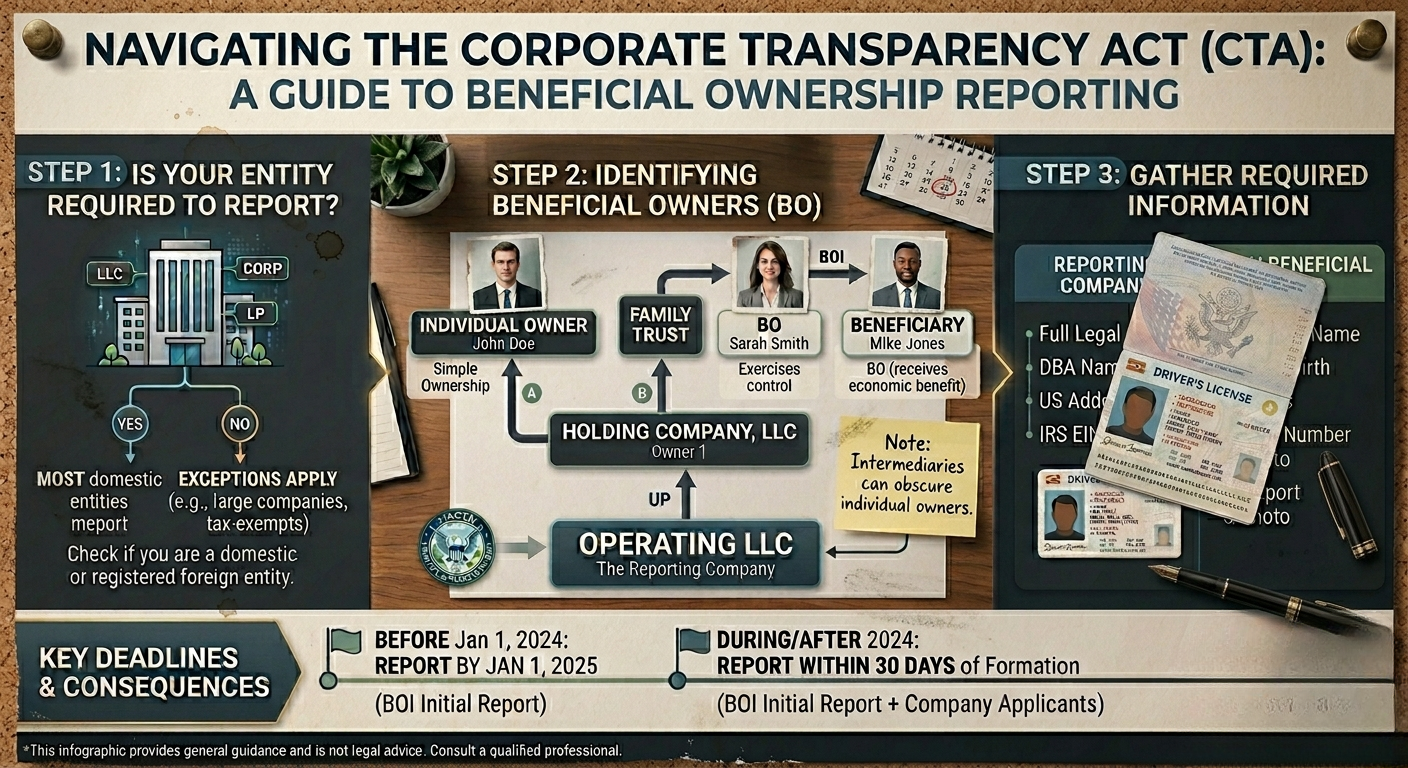
The federal beneficial ownership rules that took effect in 2024 under the Corporate Transparency Act added a new layer to the entity compliance picture. While the banking-specific KYC requirements predate this rule, the two overlap in practice. Clients who are unsure about their reporting obligations under the CTA, or who have structured ownership in ways that create complexity (tiered entities, nominees, trust ownership), sometimes encounter banking issues because their ownership structure is difficult to represent on a bank’s standard onboarding forms.
The solution is not to obscure the structure but to understand it clearly enough to explain it accurately. A bank compliance officer who understands that a trust owns the LLC, that the trust has an identified trustee and beneficiary, and that all of that is properly documented will generally proceed. One who receives incomplete or inconsistent information about ownership will not.
Foreign Nationals Forming U.S. Entities
Foreign nationals forming U.S. LLCs or corporations face a more complicated setup process than domestic applicants. The EIN application must be submitted via fax or mail rather than through the online portal, which extends the timeline. Banking is more involved because the beneficial owner does not have a U.S. Social Security Number, which complicates KYC verification at many institutions.
Some banks decline to open accounts for entities with foreign ownership; others have processes in place for it. Online banking platforms have, in some cases, been more accommodating than traditional banks for these situations, though their own compliance requirements still apply. Working with a formation service that has experience with international clients and maintains banking relationships with institutions that understand international ownership structures is the most efficient path.
Acacia has worked through these setup issues across a range of entity types and client situations. For general guidance on formation and compliance, MichaelIoane.com is a useful reference.
The information in this article reflects general structural principles and practical observations from consulting experience and is provided for educational purposes only. It should not be interpreted as individualized legal or tax advice.
Expand your knowledge of asset protection, business planning, taxation, and private trusts. Explore the available books on Amazon.