

DBA Compliance Requirements: What You Need to Know
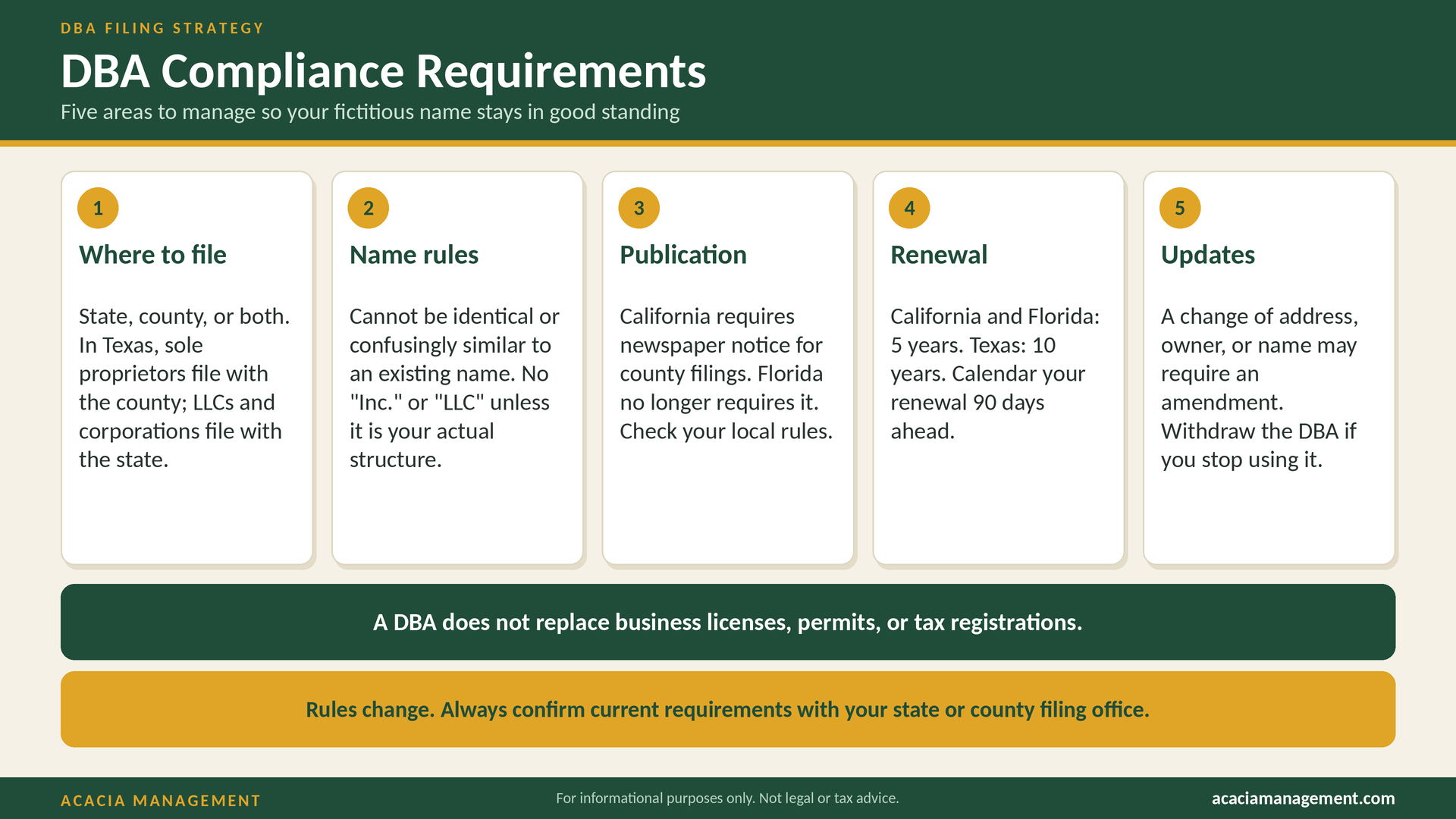
Registering a DBA is not a one-time task. Because DBA laws are set at the state, county, and sometimes city level, compliance means understanding where to file, which names are allowed, whether you must publish a notice, when to renew, and when to update your registration.
This guide covers the major compliance areas. It uses a few states as examples, but rules change, so always confirm current requirements with your filing office before acting.
1. Where to File
There is no single national DBA registry. Where you file depends on your state and often on your business structure.
- State-level filing. Some states register DBAs through the Secretary of State or a similar agency. Florida, for example, registers fictitious names through its Division of Corporations.
- County-level filing. Others require filing with the county clerk or recorder. California fictitious business name statements are filed with the county clerk.
- Split systems. Some states divide filings by entity type. In Texas, sole proprietors and general partnerships typically file an assumed name certificate with the county clerk, while LLCs and corporations file with the Secretary of State.
- City-level requirements. Some cities require a local business license that references your operating name.
If you operate in more than one county or state, you may need to register in each. Out-of-state entities may also need to register as a foreign entity before operating locally.
2. Name Requirements and Restrictions
Most jurisdictions place limits on what you can call your business.
- Distinguishability. Your name generally can’t be identical or deceptively similar to another registered name in the same jurisdiction. Some states check only against registered entities, while others check DBAs too.
- No misleading designators. You can’t imply a legal structure you don’t have. A sole proprietor can’t use “Inc.” or “LLC.” Words like “bank,” “insurance,” or “university” can require special authorization.
- Restricted terms. Certain professions, such as law, medicine, and engineering, have naming rules set by licensing boards.
- No unlawful purposes. Names suggesting illegal activity are prohibited.
Passing a state’s name check doesn’t mean you can use the name freely. Name availability for a DBA is not the same as trademark clearance. Search the USPTO database and common-law usage separately to avoid infringement disputes.
3. Publication Requirements
Some jurisdictions require you to publish notice of your fictitious name in a local newspaper.
- California requires publication of a fictitious business name statement in a newspaper of general circulation in the county where the principal place of business is located, generally within 30 days of filing, for four consecutive weeks. Proof of publication is then filed with the county clerk.
- Florida no longer requires newspaper publication for fictitious names.
- Other states vary, and some have never required it.
Publication can add significantly to your costs, so check early. Keep the proof of publication with your records.
4. Fees
Filing fees vary by jurisdiction and can range from a small administrative amount to over a hundred dollars. Additional costs can include:
- Publication fees (where required)
- Name reservation fees
- Fees for certified copies of the certificate
- Fees for amendments or renewals
- Professional service fees if you use a filing provider
Check your filing office’s current fee schedule rather than relying on figures from third-party sites.
5. Duration and Renewal
DBAs don’t last forever. Typical terms include:
- California: five years from the filing date, with a renewal statement needed before expiration
- Florida: five years, ending December 31 of the fifth year
- Texas: assumed name certificates have generally been valid for ten years
Some states require renewal; others require a new filing. Missing a renewal can lapse your registration, which can cause problems with banking, contracts, and legal standing. Set calendar reminders at least 90 days before expiration.
6. Updating Your Registration
If your information changes, you often have to file an amendment or new statement. Triggers commonly include:
- A change in business address
- A change of owners or partners
- A change in entity type, such as converting from sole proprietorship to LLC
- A change to the DBA name itself, which usually requires a new registration
- Abandoning the name, in which case many states want a formal withdrawal or abandonment filing
Leaving outdated registrations on the public record can create confusion and, in some cases, legal exposure.
7. Related Licenses, Taxes, and Records
A DBA does not replace other compliance obligations. Make sure you also address:
- Business licenses and permits required by your city, county, or state
- Professional licenses for regulated occupations
- Sales tax permits if you sell taxable goods or services
- Employer Identification Number (EIN). Sole proprietors with no employees may not need one, but many obtain one to avoid using a Social Security number on forms
- Business bank account in the DBA name, with a copy of your certificate on file
Update your DBA on invoices, contracts, your website, and your tax and licensing records so they all match.
8. Consequences of Non-Compliance
Penalties vary, but common consequences include:
- Fines or penalties from the state or county
- Inability to enforce contracts or sue in court under the name until you register (some states bar unregistered users from bringing suit)
- Banking difficulties if your account name doesn’t match registered records
- Name disputes if another party registers the same name first
Fixing a lapse generally costs more than staying compliant.
9. A Practical Compliance Checklist
- ☐ Confirm which office (state, county, or both) handles your filing
- ☐ Search name availability in state and county records
- ☐ Run a trademark search with the USPTO
- ☐ Check publication requirements and budget for them
- ☐ File the application and pay fees
- ☐ Save your certificate and proof of publication
- ☐ Update your bank, licenses, invoices, and website
- ☐ Calendar renewal 90 days before expiration
- ☐ File amendments when information changes
- ☐ Withdraw the DBA if you stop using the name
Where to Verify Current Rules
Requirements change, so confirm with official sources: your state’s Secretary of State or Division of Corporations, your county clerk’s office, and the U.S. Small Business Administration at sba.gov https://www.sba.gov
Key Takeaways
- DBA compliance is local, so rules differ by state, county, and entity type.
- Check name restrictions, publication requirements, fees, and renewal terms before filing.
- Update or withdraw your registration when facts change.
- A DBA doesn’t replace licenses, permits, or tax registrations.
This article is for informational purposes only and does not constitute legal or tax advice.
Expand your knowledge of asset protection, business planning, taxation, and private trusts. Explore the available books on Amazon.