
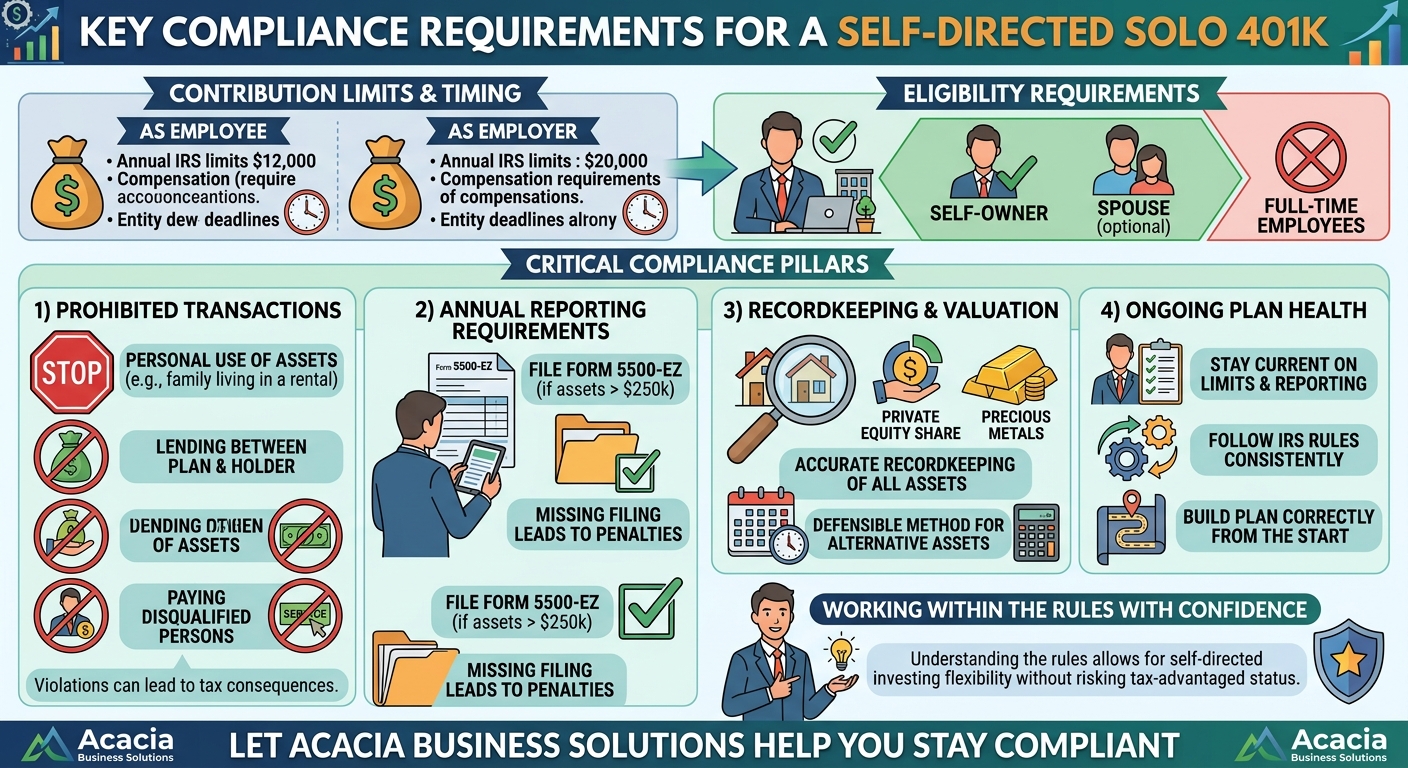

Essential Compliance Requirements for Modern Businesses
The flexibility that makes a solo 401k appealing also brings real compliance responsibility.
Furthermore, since the account holder often manages the plan, Solo 401k compliance requirements require understanding contributions, prohibited transactions, and reporting.
Contribution Limits and Timing
A Solo 401k allows contributions in two capacities: as employee and as employer, within IRS limits. These limits are set by the IRS and are periodically adjusted. Employee contributions must come from compensation earned through the business, with deadlines tied to the tax year and entity type. Missing deadlines or contributing beyond the allowed limits can create tax complications requiring correction. Understanding Solo 401k compliance requirements helps avoid penalties.
Eligibility Requirements
A solo 401k is available only to business owners without full-time employees other than themselves and a spouse.
However, if a business hires full-time employees beyond the exception, it becomes ineligible.
To meet Solo 401k compliance requirements, the plan must transition to a structure that includes employees.
Prohibited Transactions
As with a self directed IRA, a solo 401k is subject to prohibited transaction rules involving disqualified persons.
Additionally, these disqualified persons generally include the account holder, their spouse, and certain family members.
This means the plan cannot be used to directly benefit the account holder outside of legitimate retirement account activity.
For example, prohibited transactions include using plan assets personally, such as living in property the plan owns.
They also include lending money between the plan and the account holder.
And paying disqualified persons for services connected to plan investments is prohibited.
Violating these rules can result in serious tax consequences, potentially including disqualification of the plan’s tax advantaged status.
Annual Reporting Requirements
Once a solo 401k plan’s assets exceed a threshold, the plan must file an annual report with the IRS. Additionally, Form 5500-EZ discloses plan assets and supports ongoing compliance with retirement regulations.
Missing this filing when required can lead to penalties. Therefore, account holders should track their plan’s asset value and filing obligations, a key component of Solo 401k compliance requirements.
Record-keeping and Valuation
For solo 401k plans holding alternative assets like real estate or private business interests, accurate record-keeping and periodic valuation of those assets are essential. Unlike publicly traded securities, alternative assets do not have a readily available market price, which means account holders need a reasonable, defensible method for determining and documenting asset values over time.
Working Within the Rules With Confidence
None of these compliance requirements should discourage a business owner from using a solo 401k. The plan offers real advantages for those who understand and follow the rules that govern it. The key is building the plan correctly from the start, with proper documentation, a clear understanding of prohibited transactions, and a plan for staying current on contribution limits and reporting requirements each year.
Let Acacia Business Solutions Help You Stay Compliant
Acacia Business Solutions helps business owners set up and maintain solo 401k plans that meet all applicable compliance requirements, so the flexibility of self directed investing does not come at the cost of the plan’s tax advantaged status.
Explore our retirement structuring services to learn more. Visit Acacia Business Solutions to schedule a consultation and make sure your solo 401k stays compliant year after year.
Expand your knowledge of asset protection, business planning, taxation, and private trusts. Explore the available books on Amazon.