

Essential Guide to Privacy Structuring
Many people are surprised by how much personal information becomes public. It happens when they form a business or buy property in their name. Privacy structuring organizes ownership to keep personal data out of public reach while staying compliant. How to keep business ownership private can guide these steps.
This guide covers How to keep business ownership private by showing how privacy gets built into a structure.
It explains where personal exposure actually comes from.
Additionally, it shows how layering multiple protections creates a stronger overall result.
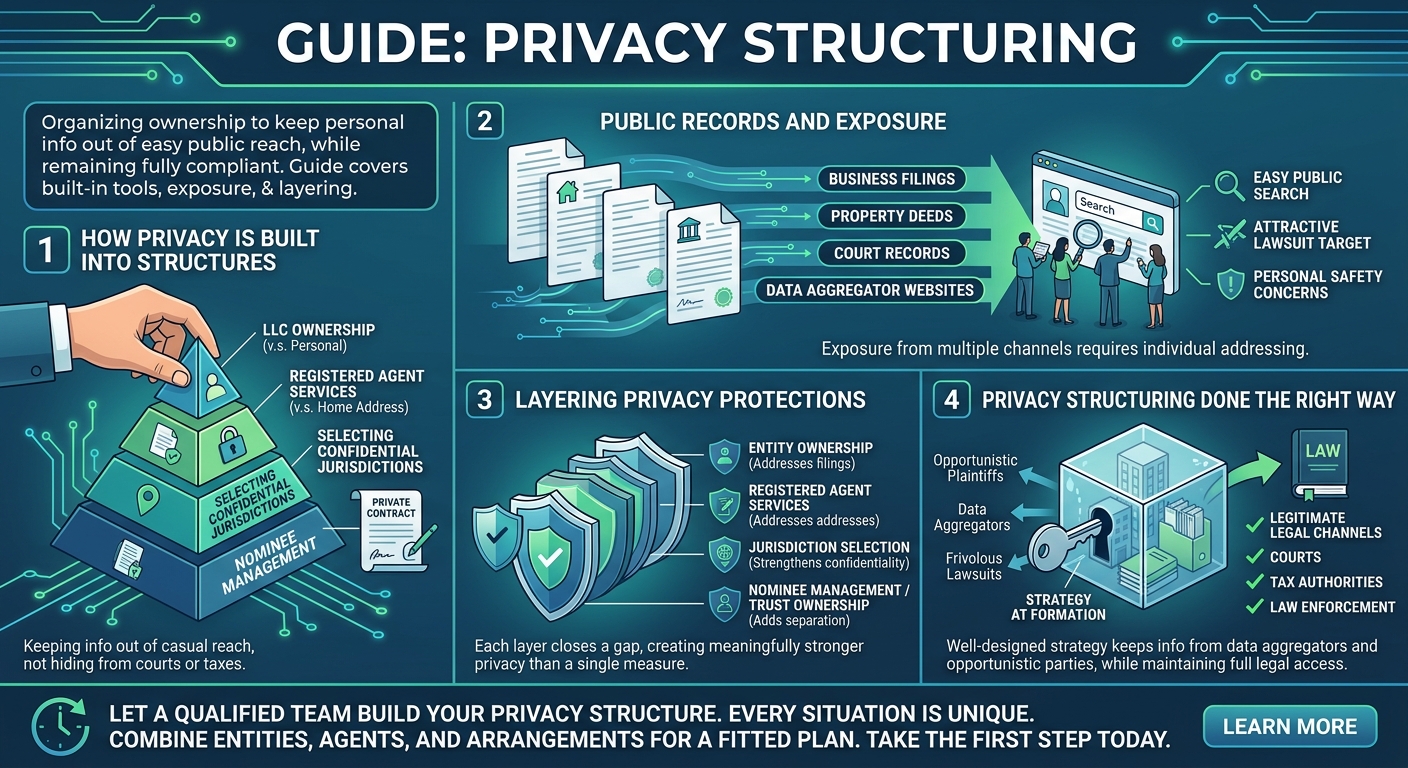
How Privacy Is Built Into Structures
Privacy is created through a combination of tools.
An LLC can hold property and business interests rather than a personal name.
Using registered agent services keeps the business address in filings instead of a home address.
How to keep business ownership private can shape your setup.
Choose jurisdictions with stronger confidentiality protections.
In appropriate cases, nominee management may be useful.
Beneficial ownership is then governed by private agreements rather than public filings.
None of this is about hiding assets from legitimate creditors, courts, or tax authorities.
It is about keeping personal information out of casual public reach.
Public Records and Exposure
Personal information typically becomes public through several channels: business formation filings, property deeds, court records, and data aggregator websites that compile all of it into searchable profiles. This exposure can make business owners more attractive targets for lawsuits and can create real personal safety concerns, particularly for those who deal directly with the public or manage property. Reducing this exposure means addressing each of these channels individually, since gaps in one area can undermine protections built elsewhere.
Layering Privacy Protections
Because exposure comes from multiple directions, effective privacy structuring layers several protections together. Entity ownership addresses business and property filings. Registered agent services address the address tied to those filings. Jurisdiction selection strengthens confidentiality around ownership records. Nominee management and trust ownership add further separation between an individual and the public record of who controls specific assets. Each layer closes a different gap, and together they create meaningfully stronger privacy than any single measure on its own.
Privacy Structuring Done the Right Way
Good privacy structuring is built at the time of formation and designed to work alongside full legal compliance, not around it. Courts, tax authorities, and law enforcement retain access to ownership information through legitimate legal channels regardless of how a structure is built. What a well designed privacy strategy accomplishes is keeping that same information out of the hands of data aggregators, opportunistic plaintiffs, and anyone else without a legitimate legal reason to have it.
Let Acacia Business Solutions Build Your Privacy Structure
Every individual and business has a different level of exposure and a different set of privacy concerns. Acacia Business Solutions helps clients design privacy structures that fit their specific situation, combining the right entities, registered agent services, and ownership arrangements to keep personal information where it belongs.
Learn more about our nominee services or talk with our team about a complete asset protection review. Visit Acacia Business Solutions to schedule a consultation and take the first step toward a more private structure.
Expand your knowledge of asset protection, business planning, taxation, and private trusts. Explore the available books on Amazon.