

The Ultimate Guide to Protecting Your Business
Owning a business means taking on risks. However, that risk need not reach everything the owner has built, including personal savings, home, and family security. Effective planning shows how risk can be separated from personal assets. Structured protection aims to keep most liabilities within the business, so a single lawsuit cannot erase a lifetime of work. This approach requires careful design and ongoing management.
Asset protection for business owners is about building a structure that contains risk where it belongs, so a single claim cannot threaten a lifetime of work. By adopting proper legal entities and policies, owners can pursue business goals with greater confidence. This strategy supports Business Owner Protection, helping income, savings, and family security survive unforeseen events.
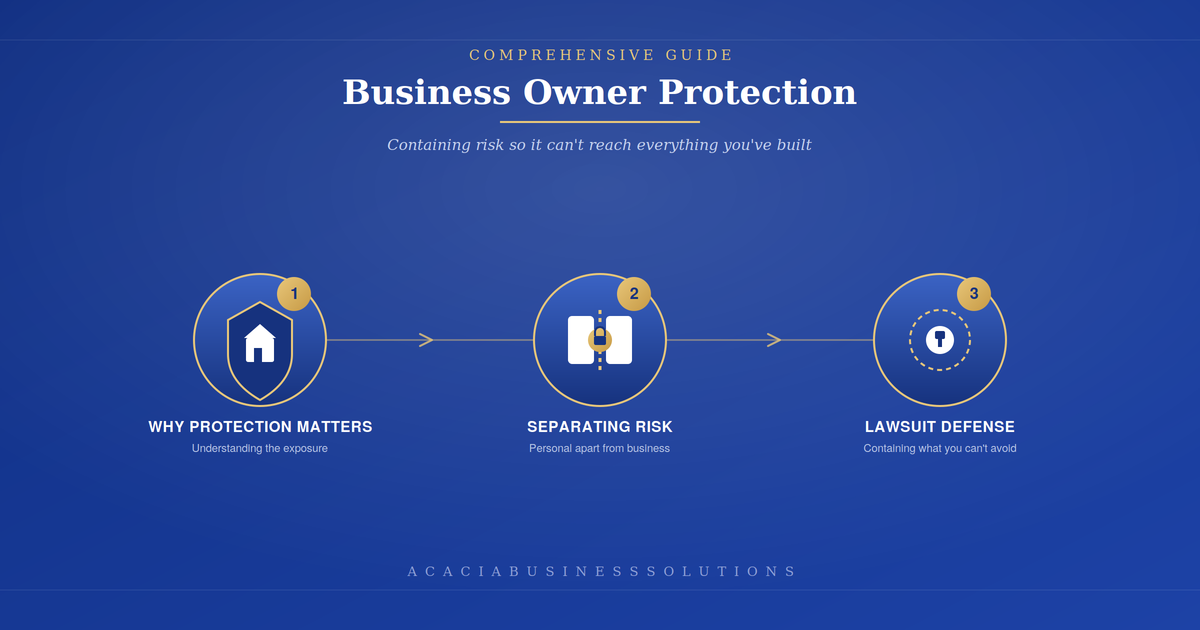
This guide covers why protection matters. It explains how to separate personal and business risk. It also shows how to structure a business for real lawsuit defense.
Why Business Owners Need Protection
Every business carries liability exposure, from customer and employee claims to contract disputes and accidents. Insurance covers part of this risk, but it has limits and exclusions that can leave an owner personally exposed. Business owners who wait until a lawsuit arises to think about asset protection have far fewer options. Restructuring assets after a claim surface can be treated as a fraudulent transfer. Real protection starts before any dispute exists, and that is the focus of Business Owner Protection.
Separating Personal and Business Risk
Forming an LLC creates a legal boundary between an owner and their business, but that boundary only holds up if it is genuinely maintained. Mixing personal and business finances, signing personal guarantees, or ignoring basic business formalities can allow a court to disregard the entity entirely. Beyond the entity itself, many business owners further separate risk by holding valuable assets in a separate holding entity, and by placing personal assets like a home or savings into properly structured trusts, so business risk and personal risk never overlap.
Structuring for Lawsuit Defense
A defensive structure typically combines several elements: a properly maintained operating entity, separate holding entities for valuable assets, trusts to protect personal wealth, and adequate insurance to handle the first layer of any claim. When a lawsuit is filed against a properly structured business, the claim generally stays contained to the entity being sued, while assets held elsewhere remain protected. This containment, not immunity from lawsuits altogether, is the real goal of asset protection planning.
Putting It All Together
Effective asset protection for business owners is rarely a single step. It is a combination of proper entity formation, clear separation between personal and business risk, and structures like trusts that shield personal wealth from claims that have nothing to do with those specific assets. Built early and maintained consistently, this kind of structure allows a business owner to take on the risks of running a business without putting everything else they have built on the line.
Let Acacia Business Solutions Protect What You Have Built
Every business owner’s situation is different. The right protection plan depends on the assets involved, the level of risk in daily operations, and long-term goals. Acacia Business Solutions works with business owners to design and maintain protection strategies that hold up when they are tested.
Start with our LLC formation services, protect personal assets with our trust formation services, or talk with our team about a complete asset protection review. Visit Acacia Business Solutions to schedule a consultation and build a protection plan around your business.
Expand your knowledge of asset protection, business planning, taxation, and private trusts. Explore the available books on Amazon.