
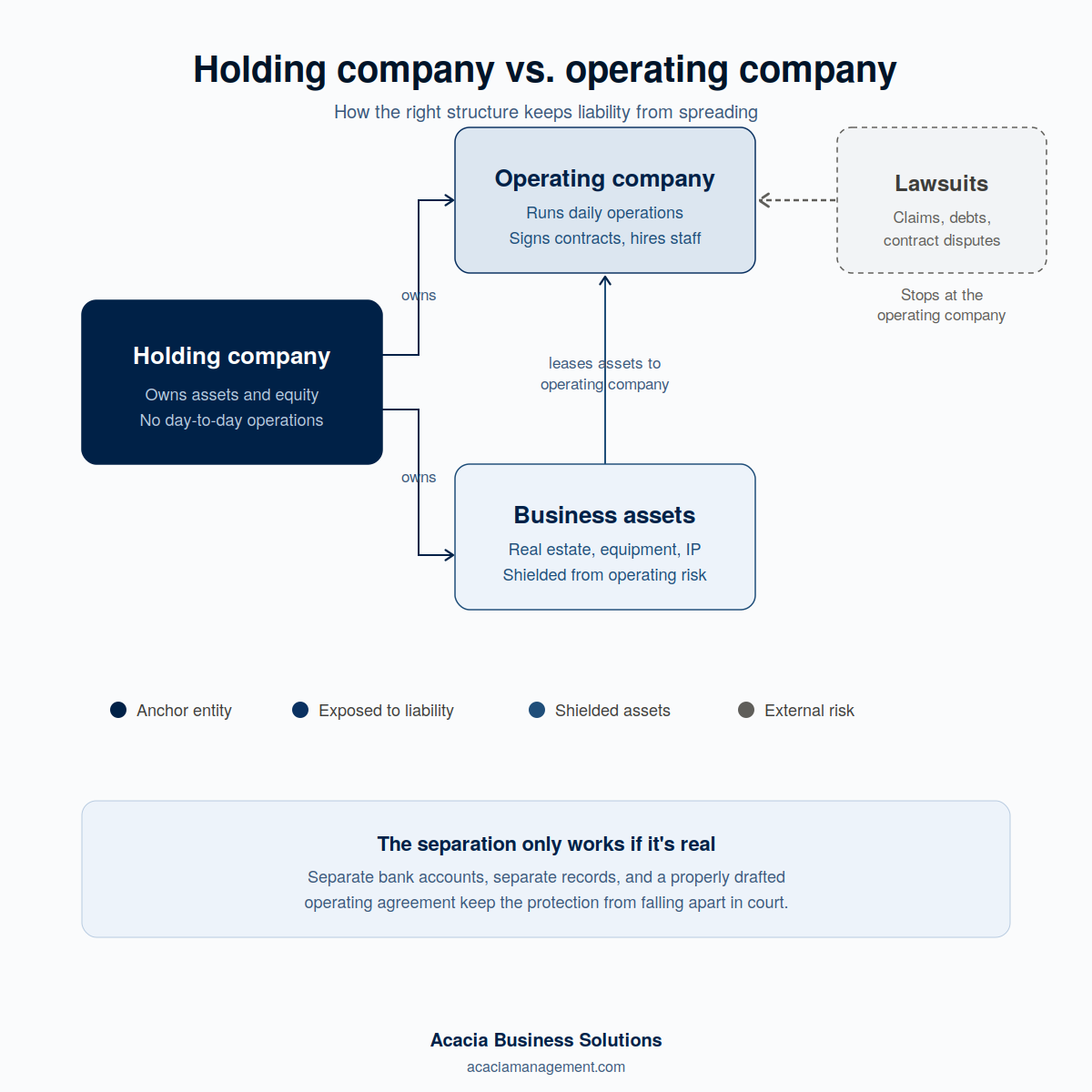

Essential, Proven Differences Between Holding and Operating Companies
One of the most important decisions for the Operating company in advanced LLC structuring is understanding the difference.
A holding company and an operating company have different purposes.
These two roles work together within the Operating company, but they serve different purposes.
Mixing them up can leave a business more exposed than its owner realizes.
What Is an Operating Company?
An operating company is the entity that runs the business. It signs contracts, hires employees, sells products or services, and interacts directly with customers or clients. Because it is the entity doing the active, day-to-day work, it also carries the highest exposure to lawsuits, debts, and liability claims.
When a customer is injured, an employee files a claim. A contract dispute may also arise. In these cases, however, the Operating company is typically the one facing liability.
What Is a Holding Company?
A holding company does not conduct business operations. It does not sell products, hire employees, or sign customer contracts. Instead, it exists to own valuable assets, such as real estate, equipment, trademarks, or ownership interests in one or more operating companies.
Because a holding company stays out of daily operations, it is less likely to be pulled into a lawsuit.
Additionally, if the Operating company is sued, the assets inside the holding company are generally protected.
This holds when the two entities are properly maintained as separate businesses.
How Holding and Operating Companies Work Together
In a typical structure, the holding company owns the Operating company.
Similarly, it may also own key assets used by the business.
For example, a holding company might own a building or equipment and lease it at a fair market rate.
The business benefits from access to needed resources while assets stay outside operational risk.
This arrangement also has practical benefits beyond liability protection. It can simplify ownership changes for the Operating company, and it can make it easier to bring on investors or partners in one part of the business.
This avoids exposing them to the risk of the entire operation and creates a cleaner path for succession planning or eventual sales.
Why the Separation Has to Be Real
A holding company structure only provides protection if the separation between entities is genuine, not just a formality on paper. Each entity needs its own bank account, its own financial records, and a properly drafted operating agreement that defines how it is managed and how it interacts with related entities.
Courts look closely at whether entities are treated as truly independent businesses. If funds are mixed, records are not kept separately, or agreements between the entities are not documented, the protection a holding company is meant to provide can fall apart, a risk commonly known as piercing the corporate veil.
Setting Up the Right Structure
Deciding whether your business needs a holding company depends on the assets involved and the level of risk in daily operations. It also depends on your long-term goals and how to structure the relationship between it and your operating company. For many business owners, especially those with valuable equipment, real estate, or intellectual property, the added protection is well worth the extra step. Operating company
Let Acacia Business Solutions Help You Structure It Right
Indeed, Setting up a holding company and operating company correctly takes more than filing paperwork. Acacia Business Solutions works with business owners to design structures that hold up under real scrutiny, not just in theory.
Start with our LLC formation services, and build a solid foundation with a properly drafted operating agreement.
Or speak with our team about a full asset protection review for your business.
Visit Acacia Business Solutions to schedule a consultation.
Additionally, take the next step toward protecting the assets you have worked hard to build.
Expand your knowledge of asset protection, business planning, taxation, and private trusts. Explore the available books on Amazon.