

How to Avoid Administrative Dissolution: Essential Steps
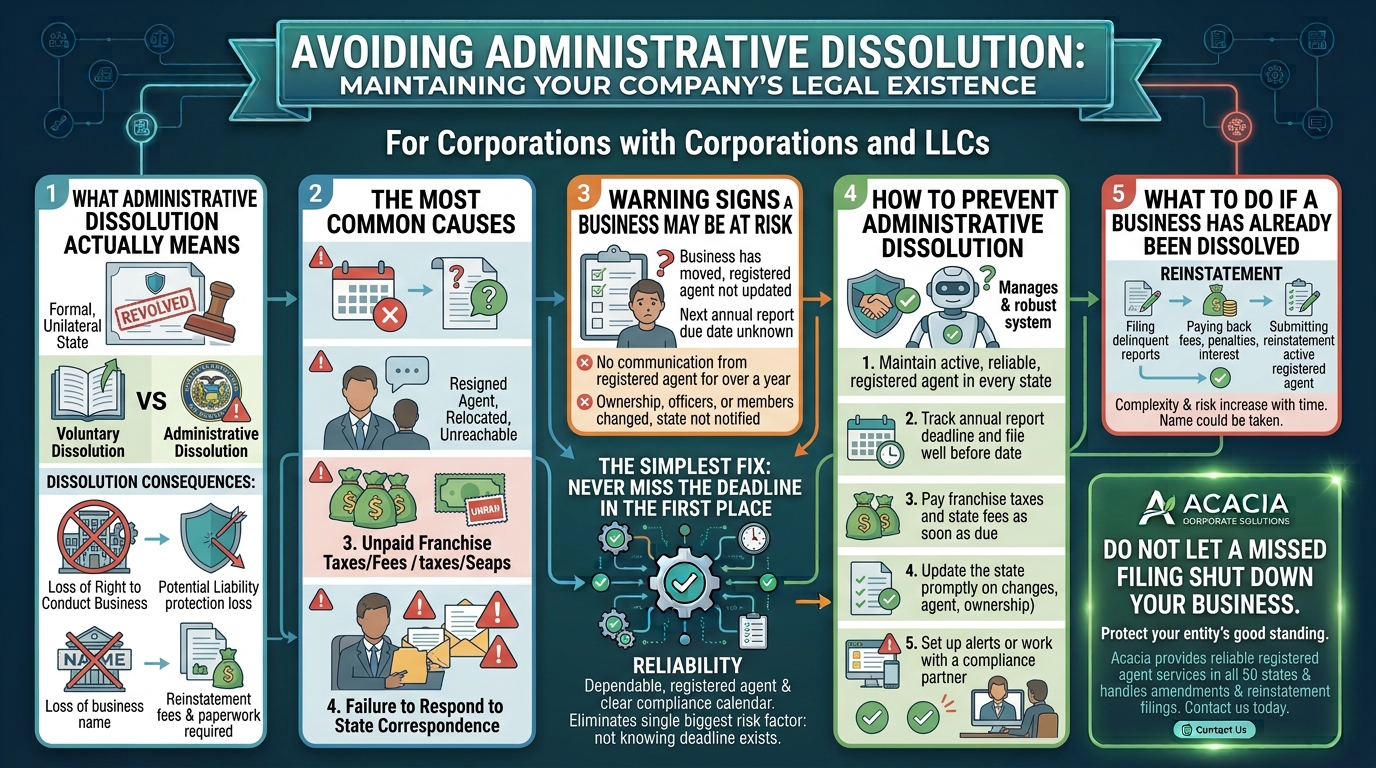
What administrative dissolution means. administrative dissolution is a state’s formal, unilateral termination of a corporation’s or LLC’s legal existence. It is not the owners’ voluntary dissolution. The change affects how the entity can operate under state law. The process may require filings and notices before it takes effect.
Once dissolved, a business generally experiences the following. It ends the entity’s ability to sue or be sued as a party. Assets and liabilities must be handled according to law. The public records reflect the dissolution. State offices may update records. The change may limit ongoing legal rights and obligations.
- Loss of the right to conduct business under that state’s law
- Potential loss of liability protection for owners going forward
- Potential loss of the business name to another filer
- Reinstatement fees and paperwork required to restore its status
The Most Common Causes
Missed Annual Reports
This is by far the leading cause of administrative dissolution. States use annual or biennial reports to
confirm a business is still active, and missing the deadline, even by a few months, can trigger dissolution
proceedings.
No Active Registered Agent. Each state requires a reachable registered agent. If a registered agent resigns, relocates, or stops responding, a replacement may not be appointed in time. The state can dissolve the entity for noncompliance. This underscores the need for timely agent changes.
Unpaid franchise taxes or state fees can lead to dissolution in some states. Some states dissolve entities specifically for failing to pay ongoing franchise taxes or renewal fees, separate from the annual report requirement. Prompt action helps avoid state-imposed penalties. Businesses should monitor renewal dates to prevent inadvertent dissolution.
Failure to respond to state correspondence can cause problems. Because much state correspondence is routed through the registered agent, a lapse there often means important notices, including warnings before dissolution, never reach the business owner. Additionally, failure to answer notices can trigger administrative processes that end in dissolution.
Warning signs that a business may be at risk include ongoing noncompliance. This is a risk to avoid through regular compliance checks and timely responses. Early planning and compliance checks can reduce this risk. Keep your agent information up to date and respond promptly to notices.
- The business has moved and has not updated its registered agent or address with the state
- The next annual report due date is unknown
- No communication has been received from the registered agent in over a year
- Ownership, officers, or members have recently changed without notifying the state
How to Prevent Administrative Dissolution
- Maintain an active, reliable, registered agent in every state where the business is registered to
operate - Track the annual report deadline and file well before the last possible date
- Pay franchise taxes and state fees as soon as they are due
- Update the state promptly whenever the address, agent, or ownership changes
- Set up alerts or work with a compliance partner who monitors these deadlines
What to Do If a Business Has Already Been Dissolved
Most states allow for reinstatement within a certain window, which typically requires the following:
- Filing all delinquent annual reports
- Paying back fees, penalties, and interest
- Submitting a reinstatement application
- Confirming an active registered agent going forward
The longer a business remains dissolved, the more complicated and risky reinstatement becomes,
particularly if another entity has since claimed the business name.
The Simplest Fix: Never Miss the Deadline in the First Place
The administrative dissolution is almost entirely preventable with the right systems in place. Additionally, a dependable, registered agent and a clear compliance calendar reduce the single biggest risk. This risk is simply not knowing a deadline. Do not let a missed filing shut down your business. Acacia Business Solutions provides reliable registered agent services in all 50 states, helping you avoid notices and deadlines. If your business has already been dissolved, our team can assist with amendments and reinstatement filings. Contact us today to protect your entity’s good standing.
Expand your knowledge of asset protection, business planning, taxation, and private trusts. Explore the available books on Amazon.