
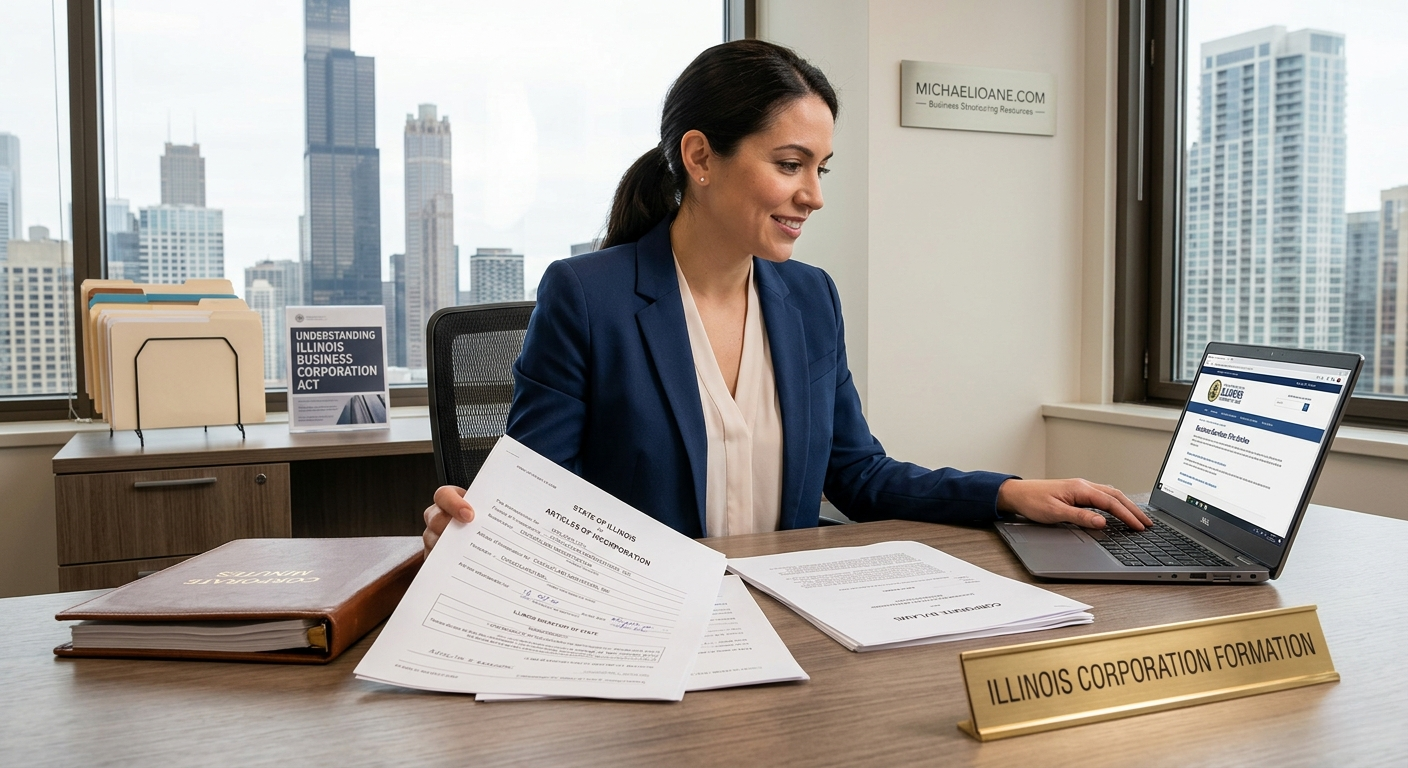

Illinois Corporation Formation
Forming a corporation in Illinois is a relatively structured process governed by the Illinois Business Corporation Act of 1983, which has been amended and updated over the years to reflect changes in how businesses operate. The Act sets out the requirements for formation, governance, and ongoing compliance, and understanding it in practical terms is more useful than relying on a generic overview of corporate law.
This article covers the foundational elements of Illinois corporation formation: what is required to form the entity, what the initial structure looks like, how the corporation relates to its shareholders and directors, and what ongoing obligations come with operating a corporation in Illinois.
The Formation Documents
A corporation in Illinois is formed by filing Articles of Incorporation with the Illinois Secretary of State. The Articles must include the corporation’s name, the number of shares the corporation is authorized to issue, the name and address of the registered agent in Illinois, and the name and address of each incorporator. The filing fee is based on the authorized share structure, which makes the initial capitalization decision relevant not only for governance purposes but also for the cost of formation.
The corporation’s name must be distinguishable from other entity names on record with the Secretary of State and must include a corporate identifier such as Corporation, Incorporated, Company, or an abbreviation of one of those terms. Illinois allows reservation of a corporate name for 90 days prior to formation, which is useful when timing matters.
Once the Articles are filed and accepted, the corporation exists as a legal entity. But formation is only the beginning. The corporation’s internal governance is established by its bylaws, adopted by the initial directors or incorporators, which govern how the corporation operates on a day-to-day basis.
Authorized Shares and Initial Capitalization
One of the decisions that catches new corporation founders off guard is the authorized share structure. Illinois charges a franchise tax and an initial filing fee that are tied to the number of authorized shares and their par value. Authorizing an unnecessarily large number of shares with high par value increases the initial cost without providing a corresponding benefit for most small business corporations.
The authorized share structure should reflect what the corporation actually needs. A closely held corporation with two or three shareholders does not need millions of authorized shares. A startup that expects to issue equity to investors may want a more flexible authorized share structure from the outset to avoid having to amend the Articles later, which would require an additional filing and fee.
Directors, Officers, and Organizational Meetings
Illinois corporations are governed by a board of directors, which is responsible for major decisions and the overall direction of the company. The directors elect officers, including a president, secretary, and treasurer at minimum, who manage day-to-day operations. In a closely held corporation, the same individuals often serve as both directors and officers.
The organizational meeting, or the action taken in lieu of a meeting through written consent, is the first formal governance step after formation. At the organizational meeting, the initial directors adopt the bylaws, elect officers, authorize the issuance of shares, and address any other preliminary matters. This is also where decisions about the corporation’s initial bank accounts, accounting methods, and fiscal year are typically made.
Skipping or poorly documenting the organizational meeting is one of the more common early mistakes in Illinois corporation formation. The record of initial corporate decisions is the foundation of the governance paper trail. Courts and creditors look at those records when disputes arise.
Illinois Franchise Tax and Annual Reporting
Illinois imposes a franchise tax on corporations that is calculated based on paid-in capital allocated to Illinois. This is distinct from the income tax and is an ongoing obligation that requires attention each year. Illinois corporations must also file an annual report with the Secretary of State and pay the associated fee to maintain good standing.
The franchise tax has been a subject of ongoing discussion in Illinois legislative circles, with proposals over the years to modify or eliminate it. As of the current regulatory environment, it remains in effect and must be accounted for in the cost of operating an Illinois corporation.
Corporation formation in Illinois is a deliberate process that rewards careful planning at the outset. The decisions made at formation, from the authorized shares structure to the initial governance documents, shape the corporation’s legal and operational environment going forward. For additional resources on business structuring and corporation formation, visit MichaelIoane.com.
The information in this article reflects general structural principles and practical observations from consulting experience and is provided for educational purposes only. It should not be interpreted as individualized legal or tax advice.
Expand your knowledge of asset protection, business planning, taxation, and private trusts. Explore the available books on Amazon.