

Multi-Entity LLC Structures Explained
Most businesses start with a single LLC, and for a while, that is all they need. But as a business grows, adds properties, launches new product lines, or takes more risk, that same single entity can start working against the owner instead of protecting them. This is where multi-entity LLC structures come in.
What Is a Multi-Entity LLC Structure?
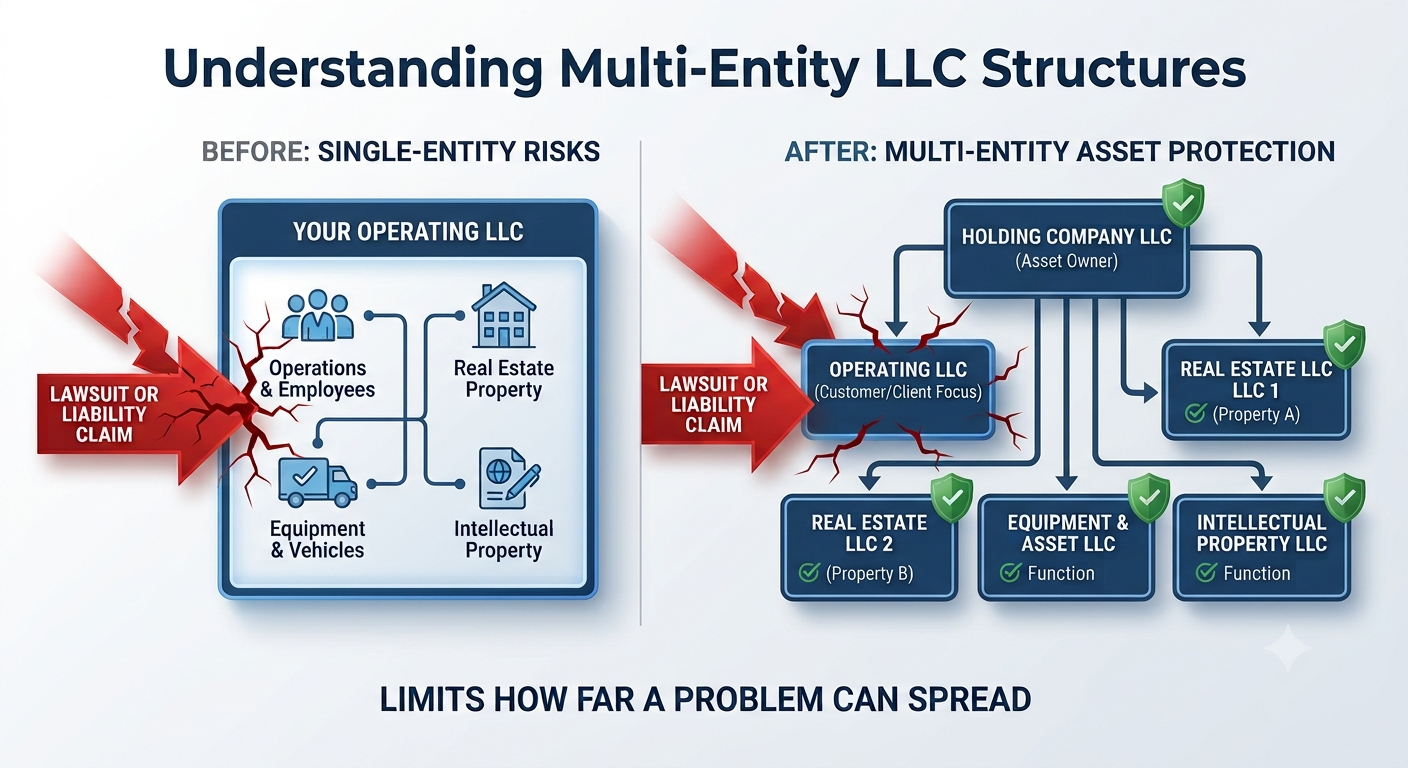
A multi-entity structure means using more than one LLC to organize different parts of a business, rather than running everything through a single company. Instead of one LLC holding your real estate, your equipment, your intellectual property, and your daily operations all at once, each of these pieces sits in its own separate entity.
The reasoning is straightforward. If one part of the business runs into legal trouble, such as a lawsuit tied to daily operations, that trouble should not automatically threaten your real estate, your savings, or other valuable assets. By separating ownership from operations, business owners create legal boundaries that limit how far a problem can spread.
Why Business Owners Use Multiple LLCs
There are a few common reasons a business owner might move from a single LLC to a multi-entity structure.
Real estate portfolios. Investors with more than one property often place each property in its own LLC. This way, a lawsuit or liability claim tied to one property does not put the others at risk.
Valuable equipment or intellectual property. Businesses that own expensive equipment, trademarks, or other intellectual property often separate those assets from the operating business, so they are not exposed to the day-to-day risks of running the company.
Multiple business lines. Entrepreneurs running more than one business, or offering more than one service line, frequently separate each into their own LLC, especially when the risk level differs between them.
Expansion into new states or markets. Businesses operating in more than one state sometimes use separate entities to keep operations, liability, and tax obligations cleanly divided.
How the Pieces Fit Together
In a typical multi-entity structure, one entity, often a holding company, owns the other LLCs or the assets they hold. The operating business, which deals directly with customers, employees, and contracts, is kept separate from the assets it uses. If the operating business faces a lawsuit or debt, the assets sitting in the other entities are generally shielded if the entities are properly formed, funded, and maintained as truly separate businesses.
This separation only works if it is respected in practice. Each entity needs its own bank account, its own records, and a clear operating agreement that defines how it is managed and how it relates to the other entities in the structure. Courts pay close attention to whether entities are genuinely distinct or simply exist on paper, so proper formation and ongoing maintenance matter just as much as the initial structure.
Is a Multi-Entity Structure Right for Your Business?
Not every business needs multiple LLCs. For a small, low-risk operation with few assets, a single entity may be perfectly adequate. But once a business accumulates valuable assets, takes on employees, expands into new markets, or faces meaningful liability exposure, a multi-entity structure can offer real protection that a single LLC simply cannot.
The right approach depends on the specific assets involved, the risk level of daily operations, and long-term goals such as bringing on partners or eventually selling parts of the business.
Build the Right Structure with Acacia Business Solutions
Deciding how many entities you need, and how they should be connected, is not something to figure out on your own. The team at Acacia Business Solutions helps business owners and real estate investors design multi-entity structures that fit their specific situation, from initial formation through ongoing compliance.
Get started with our LLC formation services, put a solid foundation in place with a properly drafted operating agreement, or talk to our team about a full asset protection review. Visit Acacia Business Solutions today to schedule a consultation and start building a structure designed to protect what you have worked to build.
Expand your knowledge of asset protection, business planning, taxation, and private trusts. Explore the available books on Amazon.