

North Carolina Trust Structuring
Trust structuring in North Carolina sits at the intersection of estate planning, asset protection, and tax planning. The decisions made when establishing a trust, including what type of trust to use, who serves as trustee, how the trust document is drafted, and what assets are transferred into it, shape the legal and financial outcomes for the grantor and beneficiaries for years or decades after formation.
North Carolina has adopted significant portions of the Uniform Trust Code, which provides a modern statutory framework for trust administration and clarifies the rights and obligations of trustees and beneficiaries. Understanding that framework and how specific trust structures operate within it is the starting point for any serious conversation about trust planning in North Carolina.
The Basic Trust Structure
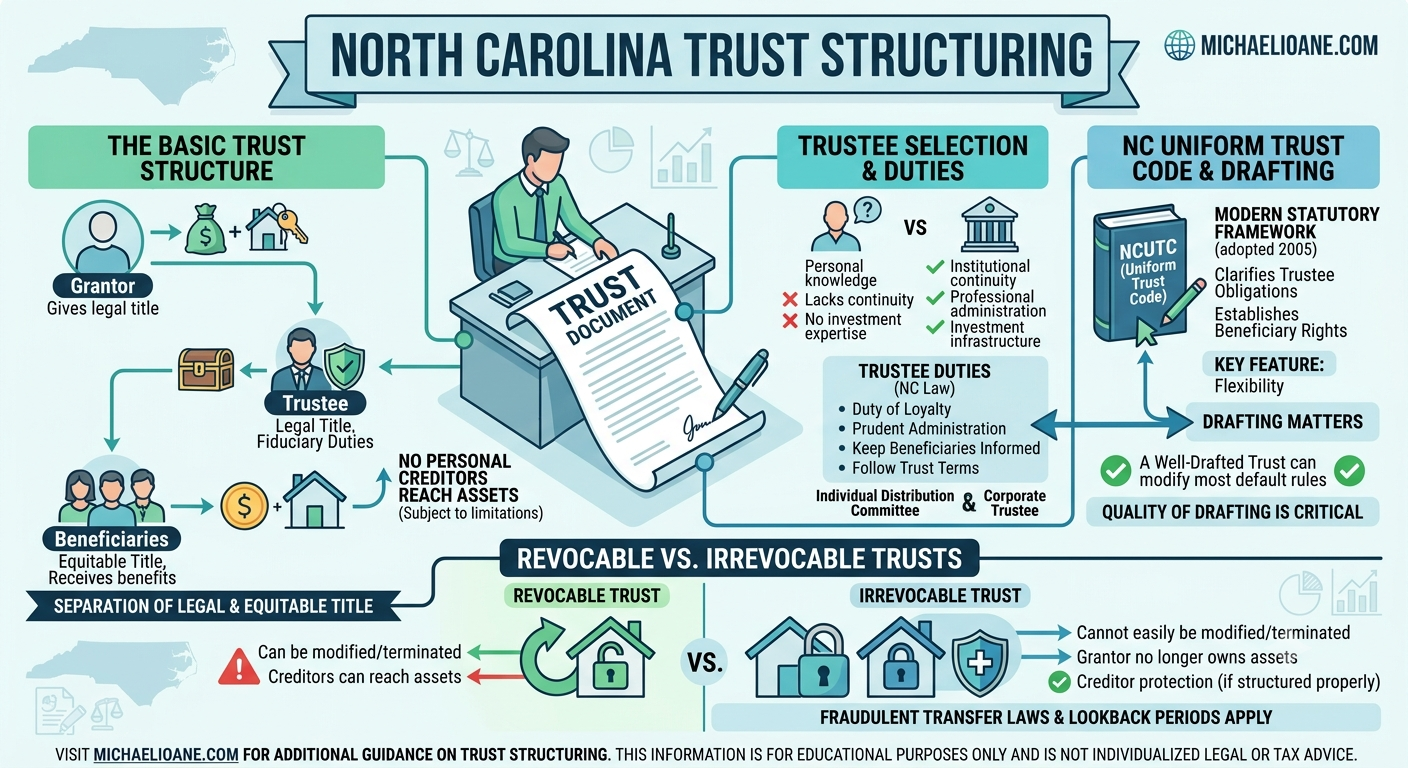
A trust is a legal arrangement in which one party, the grantor, transfers assets to another party, the trustee, to hold and manage for the benefit of one or more beneficiaries. The trustee holds legal title to the trust assets and is bound by the terms of the trust document and the fiduciary duties imposed by North Carolina law. The beneficiaries hold equitable title, meaning they have the right to benefit from the assets according to the trust’s terms, but they do not own the assets directly.
This separation of legal and equitable title is what gives trusts their structural utility. Because the trustee, rather than the grantor or beneficiary, holds legal title, the trust assets are generally not reachable by the personal creditors of the grantor or beneficiary, subject to important limitations discussed below. The degree of protection depends significantly on the type of trust involved and its structure.
Revocable vs. Irrevocable Trusts in North Carolina
The most fundamental distinction in North Carolina trust structuring is between revocable and irrevocable trusts. A revocable living trust is one that the grantor can amend or terminate during their lifetime. It is commonly used as a probate avoidance tool: assets held in a revocable trust pass to beneficiaries according to the trust’s terms without going through the North Carolina probate process, which can be time-consuming and public.
However, a revocable trust provides no asset protection from the grantor’s creditors during the grantor’s lifetime. Because the grantor retains the power to revoke the trust and reclaim the assets, creditors can reach those assets just as they could reach any other asset the grantor owns directly. The revocable trust’s value is in estate planning and administration efficiency, not in creditor protection.
An irrevocable trust, by contrast, generally cannot be modified or terminated without the consent of the beneficiaries and, in some cases, court approval. Once assets are transferred into a properly structured irrevocable trust, the grantor no longer owns them. That transfer, if made without fraudulent intent and with adequate remaining assets, can place the transferred assets beyond the reach of the grantor’s future creditors, though North Carolina’s fraudulent transfer laws and applicable lookback periods must be carefully observed.
Trustee Selection and Duties
The trustee is the central figure in any North Carolina trust structure. The trustee holds the assets, makes distribution decisions, files the trust’s tax returns, maintains records, and is accountable to the beneficiaries for how those duties are performed. North Carolina law imposes a duty of loyalty, a duty of prudent administration, a duty to keep beneficiaries reasonably informed, and a duty to administer the trust in accordance with its terms.
The choice between an individual trustee and a corporate trustee involves practical tradeoffs. An individual trustee, often a family member or trusted advisor, brings personal knowledge of the family’s circumstances but may lack investment expertise or the continuity that a long-term trust requires. A corporate trustee, such as a bank trust department, offers institutional continuity, investment infrastructure, and professional administration, but at a cost and with less personal familiarity with the beneficiaries’ situations.
Many North Carolina trust structures use a combination: a corporate trustee for investment and administrative functions and an individual trust protector or distribution committee with authority over discretionary distribution decisions. This kind of layered approach can balance professional administration with flexibility to account for the specific needs of individual beneficiaries.
North Carolina’s Uniform Trust Code
North Carolina adopted the Uniform Trust Code in 2005, with modifications, as the North Carolina Uniform Trust Code. The NCUTC provides default rules for trust administration that apply when the trust document is silent on a particular issue. It also establishes beneficiaries’ rights to receive information about the trust, the standards applicable to trustees, and the procedures for modifying or terminating the trust.
One important feature of the NCUTC is that many of its provisions can be modified by the trust document itself. A well-drafted North Carolina trust can alter or waive certain default rules, including some notification requirements for specific classes of beneficiaries, and can include provisions that expand or restrict the trustee’s discretionary authority. This flexibility makes the quality of the trust drafting itself a critical variable in the overall structure.
Trust structuring in North Carolina is a discipline that rewards careful planning and precise drafting. The statutory framework provides useful defaults, but the trust document is what determines whether the structure actually accomplishes its intended purposes. For additional guidance on trust structuring and related consulting frameworks, visit MichaelIoane.com.
The information in this article reflects general structural principles and practical observations from consulting experience and is provided for educational purposes only. It should not be interpreted as individualized legal or tax advice.
Expand your knowledge of asset protection, business planning, taxation, and private trusts. Explore the available books on Amazon.