

The Ultimate Guide to Trustees’ Roles and Control
Every trust, regardless of form, relies on a single core relationship. Moreover, The Role of Trustees and Control clarifies the link between the trust and its trustee. This understanding anchors a durable strategy and supports asset protection over time. This emphasis helps trustees act with confidence.
Firstly, Understanding what a trustee does and how Role of Trustees and Control operates inside a trust is essential. This knowledge underpins a trust strategy that endures and protects assets. This clarity benefits families and investors alike. It guides decision making and reinforces the long-term value of a trust.
What Does a Trustee Actually Do?
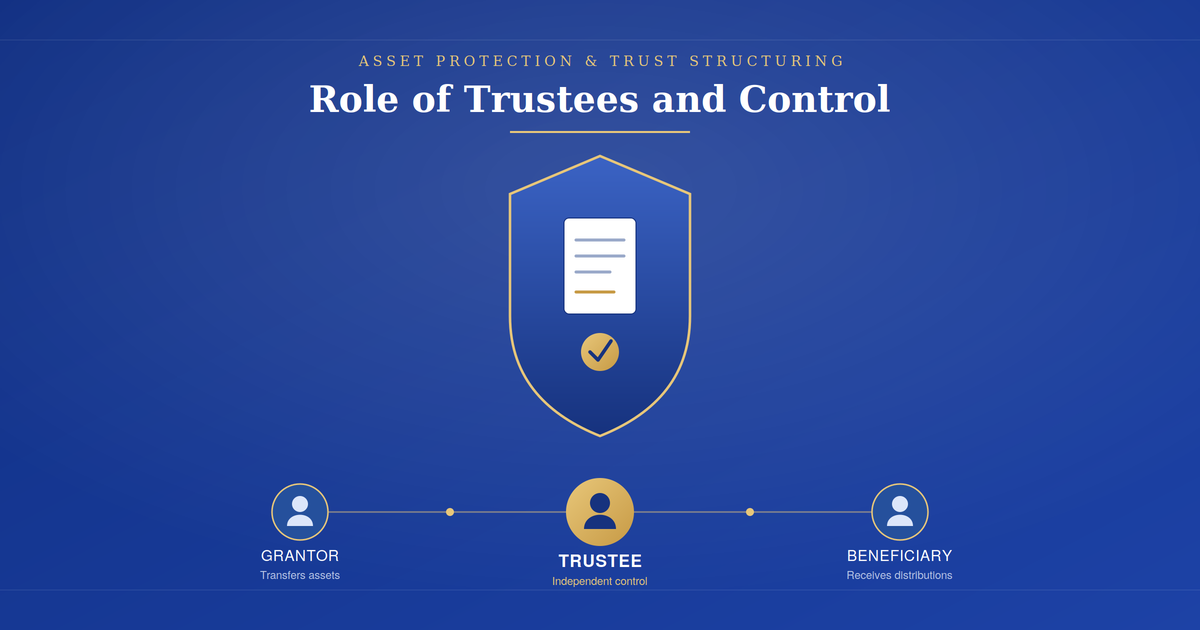
Moreover, a trustee is the person or entity responsible for managing the assets held in a trust. This role, the Role of Trustees and Control, follows the instructions laid out in the trust agreement.
This includes making distributions to beneficiaries. It also covers managing investments or property and filing required tax documents. The trustee generally acts in the best interest of the trust and its beneficiaries. The Role of Trustees and Control guides these duties.
A trustee has a legal duty. Often this is a fiduciary duty to manage the trust responsibly and in line with its terms.
This is not an informal role. Trustees can be held legally accountable if they mismanage assets or act outside the trust document.
Why Control Matters So Much in Trust Strategy
The amount of control a grantor retains over a trust directly affects the protection it provides. Moreover, the Role of Trustees and Control is one of the most important—and most misunderstood—concepts in trust structuring.
However, the Role of Trustees and Control matters. If a grantor creates a trust and controls assets, moving funds or directing decisions, courts may treat it as non-existent. This treatment undermines the trust’s legal protection and can jeopardize intended safeguards.
It undoes the protection the trust was meant to provide.
Irrevocable trusts, central to most asset protection strategies, typically require the grantor to hand meaningful control to an independent trustee.
The trustee, not the grantor, makes key distribution and management decisions based on the trust terms.
Choosing the Right Trustee
Selecting a trustee is one of the most important decisions in setting up a trust. Trustees generally fall into a few categories.
Individual trustees. A trusted family member, friend, or advisor can serve as trustee. This offers a personal touch, but it also raises questions about independence, especially in trusts meant for asset protection, where too close a relationship between the grantor and trustee can weaken the trust’s legal standing.
Professional or corporate trustees. Banks, trust companies, and professional fiduciaries can serve as trustees. However, this option, within the Role of Trustees and Control, often provides stronger independence and more consistent management, which can matter significantly for asset protection trusts, though it typically comes with ongoing fees.
However, the Role of Trustees and Control may involve co-trustees combining family insight with professional expertise.
Trustee Powers and Limitations
Additionally, the Role of Trustees and Control is defined by the trust document. Discretionary distributions to beneficiaries may be permitted. Actions like investing assets, selling property, and timing distributions require clear guidance. A well-drafted document helps avoid confusion from vague powers and prevents overly restrictive terms.
Why This Matters for Asset Protection
To protect assets, a trust must genuinely separate grantor and trust, not just on paper. However, the Role of Trustees and Control depends on the trustee acting independently and exercising real authority over trust assets.
This is often the difference between a trust that holds up under legal scrutiny and one that does not.
Let Acacia Business Solutions Help You Structure and Control the Right Way
Choosing the right trustee and structuring a trust so that control is handled correctly requires careful planning. Acacia Business Solutions works with clients to design trust structures where roles, control, and trustee responsibilities are clearly defined and properly documented from the start.
Explore our trust formation services. Talk with our team about how trustee selection fits into a broader asset protection strategy.
Visit Acacia Business Solutions to schedule a consultation and build a trust structure that holds up when it matters most.
Expand your knowledge of asset protection, business planning, taxation, and private trusts. Explore the available books on Amazon.