

The Ultimate Guide to Structuring a Proven Lawsuit Defense
Asset Protection for Small Businesses
No business owner wants to think about being sued. Owners should structure their business and personal assets with Lawsuit Defense in mind before any dispute arises. Additionally, this approach protects what they have built.
Why Structure Matters More Than Reaction
Many business owners only think seriously about asset protection after receiving a demand letter or being served with a lawsuit.
However, by that point, options are far more limited.
Courts treat moving assets after a legal claim surfaces as a fraudulent transfer.
It can unwind the transfer and, in some cases, create additional legal problems for the owner, undermining Lawsuit Defense.
A strong Lawsuit Defense comes from structures built well in advance, before any dispute appears. Moreover, asset protection planning is simply prudent business practice at that point, not a reaction to a specific threat.
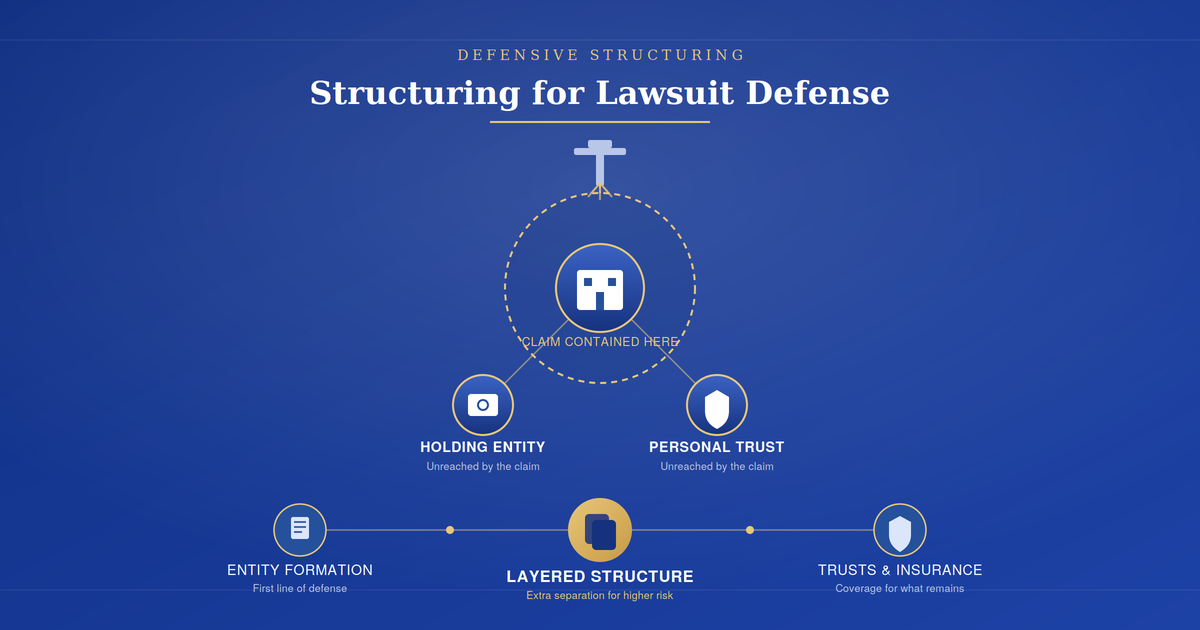
Key elements of a defensive structure guide a successful Lawsuit Defense.
Proper entity formation.
Moreover, a properly formed LLC or corporation creates the first line of defense, separating liabilities from personal assets.
This arrangement strengthens Lawsuit Defense.
Separating high-value assets reduces risk. Additionally, placing assets such as real estate, equipment, or intellectual property into holding entities keeps them insulated from operating risks.
Layered entities support higher risk operations.
For businesses with elevated liability exposure, such as premises, vehicles, or direct customer contact, extra separation protects assets.
Consequently, this approach strengthens Lawsuit Defense by limiting exposure to core operations.
Trusts protect personal assets.
Additionally, placing homes, investments, and savings into properly structured trusts supports Lawsuit Defense.
They shield assets from claims unrelated to them, including claims against the business.
Adequate insurance is essential for Lawsuit Defense.
Strong entity structuring works alongside insurance, not instead of it.
Additionally, Insurance often handles the first layer of a claim.
Entity and trust structures provide protection for what insurance does not cover.
A strong structure accomplishes much in a Lawsuit Defense.
When a lawsuit is filed against a properly structured business, the claim generally stays contained to the entity being sued. Additionally, assets held in separate entities, such as LLCs or trusts, remain outside the reach of that claim. This supports Lawsuit Defense when the structure is properly maintained and each entity is treated as genuinely separate.
This containment is the entire point of defensive structuring.
However, it does not make a business immune to lawsuits; it influences Lawsuit Defense by limiting owners’ wealth at risk.
Build your Lawsuit Defense before you need it.
The best time to structure a business for Lawsuit Defense is now.
Moreover, waiting until a claim is filed removes most of the tools that make asset protection effective in first place.
Additionally, let Acacia Business Solutions build your Lawsuit Defense.
Acacia Business Solutions helps business owners put real Lawsuit Defense structures in place.
Additionally, they do this before they are needed, by combining right entities, trusts, and asset protection strategies for each situation.
First, get started with our LLC formation services, and protect personal wealth with trust formation. Additionally, our team can discuss asset protection, including Lawsuit Defense, with a complete review. Visit Acacia Business Solutions to schedule a consultation and put a defensive structure in place today.
Expand your knowledge of asset protection, business planning, taxation, and private trusts. Explore the available books on Amazon.