
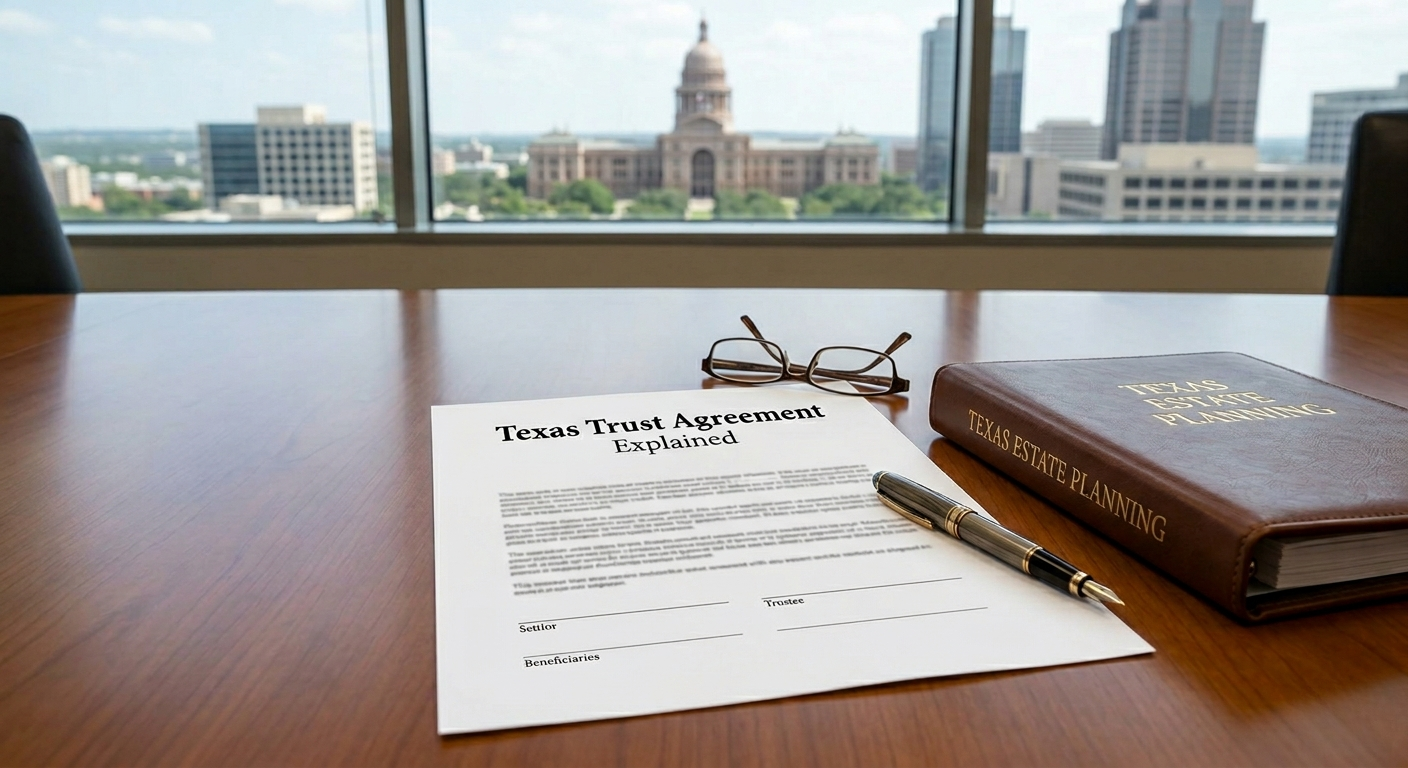

Trust Formation in Texas Explained
By Michael Freeman | Acacia
Texas has developed a trust law framework that is genuinely competitive with those of states like Nevada and South Dakota, though it does not always receive the same attention in planning conversations. The Texas Trust Code, codified under the Texas Property Code, provides a flexible and well-developed statutory structure for creating, administering, and modifying trusts. Understanding how that structure works is the starting point for anyone considering a Texas trust as part of a planning strategy.
A trust is a legal arrangement in which one party, the settlor (also called the grantor or trustor), transfers legal title to assets to another party, the trustee, to hold and manage for the benefit of one or more beneficiaries. The trust document, called the trust instrument or trust agreement, governs how the trustee administers those assets, when and how distributions are made, and what happens to the assets when the trust terminates.
Texas does not require trusts to be registered with any state agency. Unlike LLCs or corporations, a trust is not a filing-based entity; it exists when the trust instrument is executed by the settlor and the trustee accepts the role. This is both a feature and a characteristic to understand, because it means the trust’s validity and enforceability depend entirely on the quality of the trust instrument itself rather than on any state-level review or approval process.
The Core Elements of a Valid Texas Trust
Under the Texas Trust Code, a valid express trust requires four elements: a competent settlor who intends to create a trust; definite beneficiaries (with certain exceptions for charitable and honorary trusts); a trustee with duties to perform; and trust property, meaning assets actually transferred into the trust. A trust instrument that is signed but never funded (meaning no assets are transferred to it) is an unfunded trust that has no practical effect.
The settlor must have legal capacity at the time of execution, meaning they must be of sound mind and at least 18 years of age (or legally married). The intent to create a trust must be clear from the trust instrument; precatory language (words of hope or desire rather than direction) generally does not create an enforceable trust obligation. The trustee must be someone other than the sole beneficiary, as a trust in which the same person is both the only trustee and the only beneficiary, with identical interests, effectively merges and may fail.
Texas allows a single individual to serve simultaneously as settlor, trustee, and one of multiple beneficiaries, which is the common structure for a revocable living trust. The settlor creates the trust, names themselves as trustee and primary beneficiary during their lifetime, and designates successor trustees and remainder beneficiaries for the period after death or incapacity.
Revocable vs Irrevocable Trusts in Texas
The distinction between revocable and irrevocable trusts is fundamental and shapes nearly every other planning consideration. A revocable trust can be amended or revoked by the settlor at any time during their lifetime, provided they retain capacity. Because the settlor retains control, the trust assets are generally treated as the settlor’s own assets for tax purposes and for creditor claims. A revocable trust provides no asset protection against the settlor’s creditors during the settlor’s lifetime.
An irrevocable trust, once established, generally cannot be modified or revoked by the settlor without the consent of all beneficiaries or court approval. Because the settlor has relinquished control, the assets transferred into an irrevocable trust are no longer the settlor’s property in the same way, which is the basis for both the asset protection and the estate planning benefits that irrevocable trusts provide. The tradeoff is the loss of flexibility; the settlor cannot simply change their mind and take the assets back.
Texas law does provide some mechanisms for modifying irrevocable trusts under specific circumstances, including modification by consent of the settlor and all beneficiaries, modification by court order where continuation of the trust on its existing terms would defeat the trust’s purpose, and in some cases through a trust decanting provision where the trustee transfers assets to a new trust with different terms. These are not unlimited escape hatches, but they do provide some flexibility where the original trust instrument did not anticipate changed circumstances.
Common Trust Structures Used in Texas
Revocable living trusts are the most common trust structure used in Texas for basic estate planning. They allow assets to pass to beneficiaries outside of probate, maintain privacy (since trust documents are not public records, unlike a probated will), and provide a mechanism for managing assets in the event of the settlor’s incapacity. Texas has a relatively streamlined probate process compared to some other states, but many families and asset structures still benefit from the probate avoidance that a properly funded revocable trust provides.
Irrevocable life insurance trusts (ILITs) are used to hold life insurance policies outside of the insured’s taxable estate, which becomes relevant for estates that approach or exceed the federal estate tax exemption. Spousal lifetime access trusts (SLATs) allow one spouse to make a gift to an irrevocable trust for the benefit of the other spouse, removing assets from the taxable estate while retaining indirect access through the beneficiary spouse. Grantor retained annuity trusts (GRATs) and qualified personal residence trusts (QPRTs) are additional irrevocable structures used for estate tax planning.
For asset protection, irrevocable trusts where the settlor is not a beneficiary provide the most reliable protection. Texas also allows what are commonly called domestic asset protection trusts (DAPTs), though the Texas statutory framework for self-settled spendthrift trusts is more limited than states like Nevada and South Dakota, a point addressed in more detail in the asset protection article in this series.
Acacia works with clients on trust formation and structuring as part of broader asset protection and estate planning strategies. For additional commentary on Texas trust structures, MichaelIoane.com provides practical depth on these topics.
The information in this article reflects general structural principles and practical observations from consulting experience and is provided for educational purposes only. It should not be interpreted as individualized legal or tax advice.
Expand your knowledge of asset protection, business planning, taxation, and private trusts. Explore the available books on Amazon.