
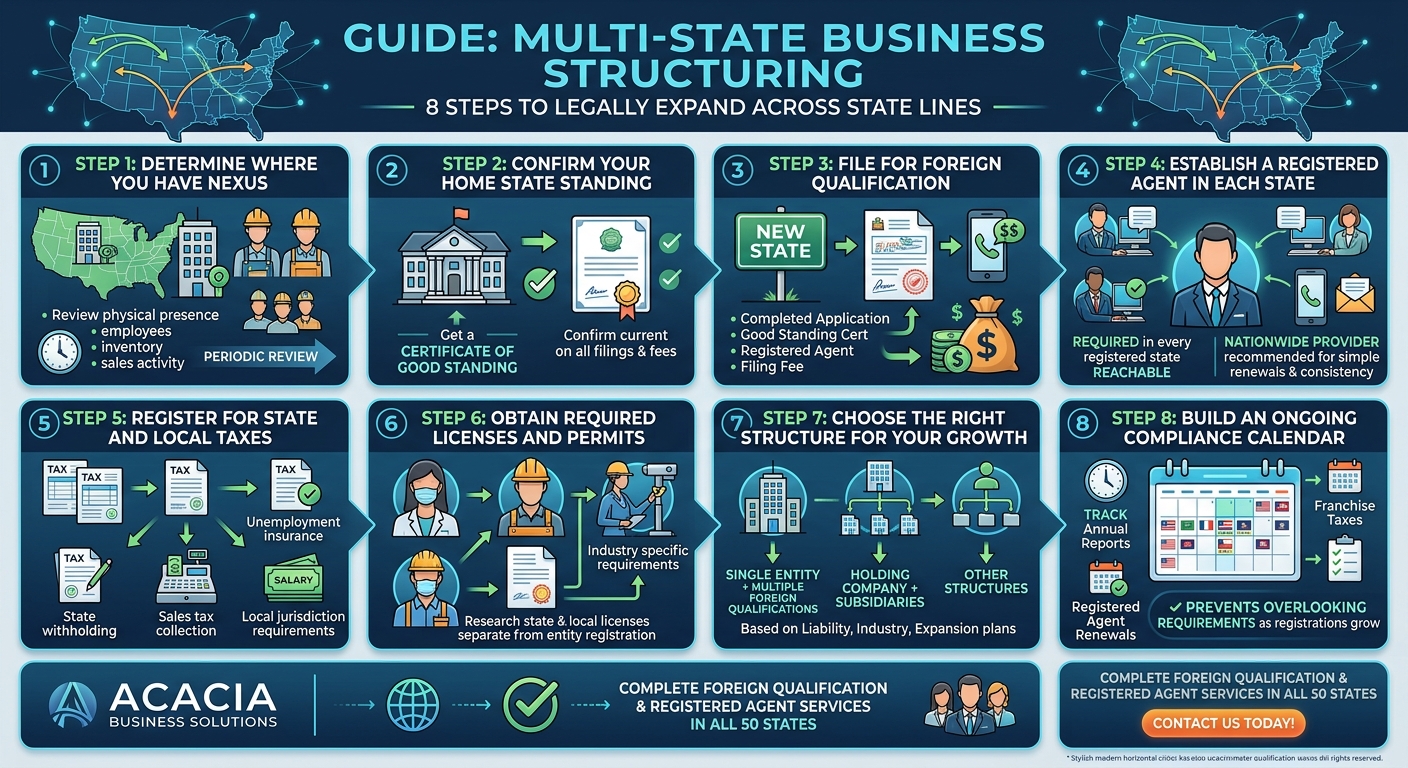

Ultimate Guide to Multi-State Structuring
Multi-state structuring guide
Before registering anywhere new, identify which states your business activities connect to. Common triggers include physical locations, employees, inventory, and, in many states, a certain level of sales activity. This step should be revisited periodically because nexus rules and business operations tend to change over time.
Most states require a certificate of good standing from your formation state before approving a foreign qualification application. Before expanding, confirm the business is current on filings and fees in its home state.
Foreign qualifications register your existing entity to operate legally in a new state. This generally requires the following:
- A completed application for authority or certificate of authority
- A certificate of good standing from your home state
- A registered agent with a physical address in the new state
- Payment of the state’s filing fee
Step 4: Establish a Registered Agent in Each State
Every state where your business registers require an active, reachable registered agent. Businesses
expanding into several states at once should consider a single provider that offers coverage nationwide,
which simplifies renewals and ensures consistent handling of state correspondence.
Step 5: Register for State and Local Taxes
Depending on your activities, you may need to register for state tax withholding, sales tax collection,
unemployment insurance, and other state specific tax accounts. Local jurisdictions within a state may
impose additional registration requirements as well.
Step 6: Obtain Required Licenses and Permits
Many industries require state or local licenses before operating legally, separate from your entity
registration. Research the specific requirements for your industry in each new state before beginning
operations there.
Step 7: Choose the Right Structure for Your Growth
This multi-state structuring guide helps you choose the right structure for growth. Evaluate whether a single entity with multiple foreign qualifications, a holding company with subsidiaries, or another structure best supports expansion.
The right choice depends on liability concerns, industry, and future state coverage. Over time, you may operate in more states.
activity
Ensure your home state standing is current. Obtain a certificate of good standing. Handle foreign qualification and the application for authority, plus the filing fee. Additionally, assign a registered agent with an active status in each new state. Complete tax registrations for state income, sales, and payroll taxes. This process is summarized in the multi-state structuring guide.
This item is applicable.
Licensing in the industry is regulated by state or local licenses.
Additionally, these licenses vary by jurisdiction.
Step 8: Build an Ongoing Compliance Calendar. Once registered, track each state’s annual report deadlines and franchise tax due dates in a single calendar. Also record registered agent renewals in the same calendar. This approach prevents omissions as registrations grow. It helps teams stay organized across states.
Additionally, you can expand into new states with confidence. Acacia Business Solutions provides complete foreign qualification and registered agent services in all 50 states. This coordinated approach saves time and reduces compliance risk across jurisdictions. Contact our team today to plan your multi-state structuring strategy.
Expand your knowledge of asset protection, business planning, taxation, and private trusts. Explore the available books on Amazon.