

How to Layer LLCs for Maximum Protection
Layering LLCs, sometimes called stacking entities, creates a hierarchy where one LLC owns another, which may own another. It is one of the more advanced tools in LLC structuring, and it is not necessary for every business. But for the right situation, it can offer a meaningful layer of protection that a single entity simply cannot provide. When to Layer LLCs can guide you on using this approach.
What Does It Mean to Layer LLCs?
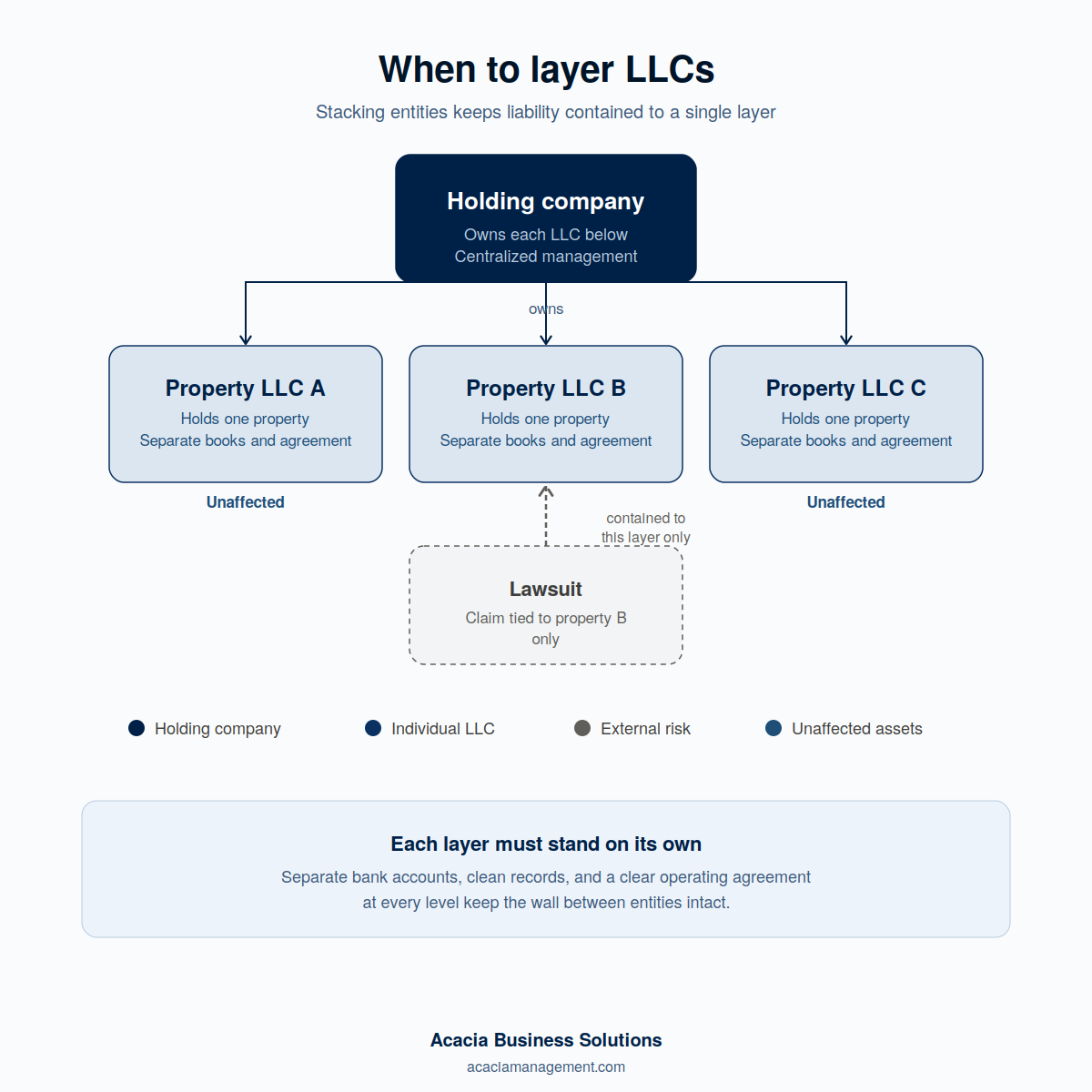
In a layered structure, ownership flows through multiple entities rather than sitting in just one. A common example involves a holding company at the top, which owns several individual LLCs beneath it, each holding a different property, asset, or line of business. If a lawsuit or liability claim arises against one of the lower entities, it generally stays contained there, without threatening the assets held in the others.
This is different from simply forming multiple unrelated LLCs. Layering specifically involves ownership relationships between the entities, which allows for centralized management and consistent structure while keeping liability separated.
Situations Where Layering Makes Sense
Layering LLCs is not something every business needs, but there are clear situations where it becomes valuable.
Multiple properties or asset classes. Real estate investors with several properties often place each one in their own LLC, then have those LLCs owned by a single holding company above them. A liability issue at one property does not put the others at risk.
High-risk operations paired with valuable assets. If a business owns expensive equipment, a trademark, or other intellectual property, it often makes sense to hold those assets in a separate entity and license or lease them to the operating company. This keeps the valuable assets insulated from operational risk.
Multiple business lines under one owner. Entrepreneurs running more than one business often benefit from separating each line into its own LLC, particularly when the businesses carry different levels of risk or serve different markets.
Bringing on investors or partners. A layered structure can make it easier to bring outside capital into one specific part of a business, without exposing those investors to the risks of the entire operation.
Planning for growth or sale. Businesses anticipating significant growth, or eventual sale of specific assets or divisions, often find that a layered structure makes those transactions cleaner and simpler down the road.
Weighing Complexity
Layering LLCs does add complexity. Each entity typically requires its own formation paperwork, registered agent, bank account, tax filings, and operating agreement. For a small, low-risk business with limited assets, this added complexity may not be worth the cost or administrative effort.
The decision usually comes down to a straightforward comparison. Business owners should weigh the cost and ongoing effort of maintaining multiple entities against the value of the assets being protected and the actual level of risk involved in the business.
Keeping a Layered Structure Sound
A layered structure only works if each entity is treated as a genuinely separate business. We require individual bank accounts, clean financial records, and clear operating agreements that define ownership and management at every level of the structure. Without that discipline, the legal protections a layered structure is meant to provide can break down. When to Layer LLCs ensures these practices are in place.
Let Acacia Business Solutions Design Your Structure
Deciding whether and how to layer LLCs depends heavily on the specifics of your business, your assets, and your goals. Acacia Business Solutions works with business owners and investors to design layered structures that are properly built and properly maintained from day one.
Get started with our LLC formation services, build a strong foundation with a properly drafted operating agreement, or talk with our team about a complete asset protection review. Visit Acacia Business Solutions to schedule a consultation and start building a structure designed around your business, not a generic template.
Expand your knowledge of asset protection, business planning, taxation, and private trusts. Explore the available books on Amazon.