
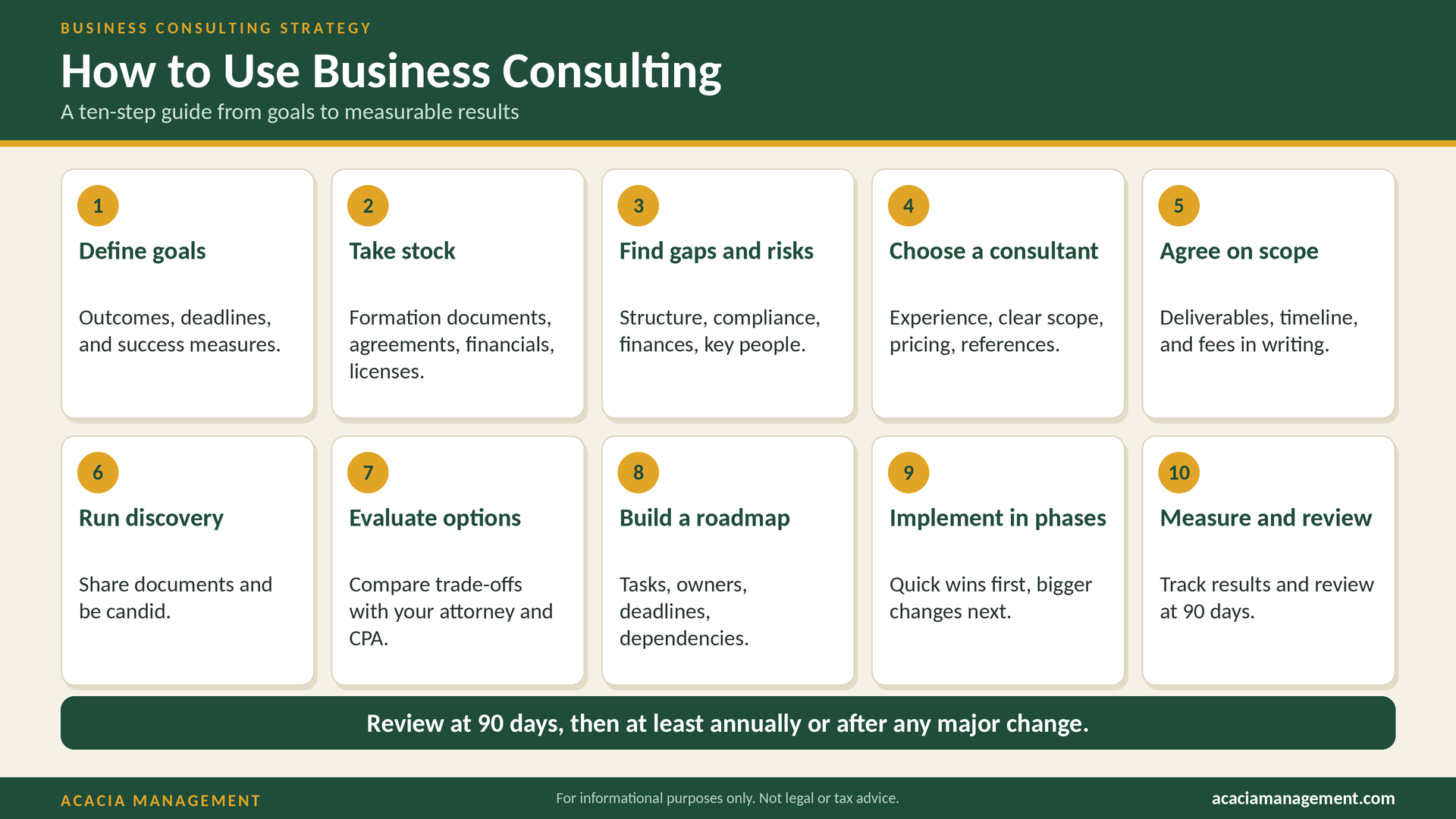

Guide: How to Use Business Consulting Effectively
Hiring a consultant is an investment, and like any investment, it pays off best when you’re prepared. This guide gives you a step-by-step process for getting value from business consulting, from clarifying what you need to measuring results after the engagement.
If you want background first, read The Role of Consulting and Strategic Structuring Advisory
Step 1: Define Your Goals and Pain Points
Start with outcomes, not solutions. “I need a consultant” is vague. These are specific:
- “I want to know whether to convert from sole proprietor to an LLC or S corporation.”
- “I’m hiring next quarter and need roles, policies, and compliance in place.”
- “I’m preparing for a bank loan and need organized records and a plan.”
- “I operate three brands and need to decide whether to separate them into different entities.”
Write down:
- What you want to achieve and by when
- What’s holding you back
- What you’ve already tried
- What success would look like (measurable if possible)
- Your budget range and timeline
Step 2: Take Stock of What You Have
Gather your core documents before the first meeting. This saves billable time and speeds up analysis.
- Formation documents: Articles of Organization or Incorporation, and any DBA certificates
- Ownership records: Operating agreement, bylaws, shareholder or partnership agreements, cap table
- Financials: Profit and loss statements, balance sheets, cash flow statements, and recent tax returns
- Licenses and permits: Business, professional, and local
- Contracts: Major customer, supplier, lease, and employment agreements
- Insurance policies: Coverage types and limits
- Org chart and key processes: Even a rough sketch helps
- Compliance calendar: If you don’t have one, note that, since it’s useful information on its own
Step 3: Identify Gaps and Risks
Do a quick self-assessment before bringing in outside help. Ask:
- Does our legal structure still fit our size, risk, and plans?
- Do all owners have written agreements?
- Are filings, licenses, and renewals current?
- Are personal and business finances fully separated?
- What happens if a key person is unavailable?
- Which one or two customers or suppliers would hurt most to lose? • Do we know our margins and cash position at any given time?
Your answers become the agenda for your consultant.
Step 4: Choose the Right Consultant
Use these criteria:
- Relevant experience with your size, industry, or challenge
- Clear scope and deliverables in writing
- Transparent pricing (hourly, fixed, or retainer) with no hidden extras
- References from similar clients
- Clear boundaries around legal and tax matters, including a willingness to work with your attorney and CPA
- Communication fit: responsiveness and plain-language explanations
Interview two or three candidates. Ask how they’d approach your specific situation, what a typical timeline looks like, and what they need from you.
Step 5: Agree on Scope, Timeline, and Deliverables
Before work starts, put the essentials in writing:
- Objectives and what’s in and out of scope
- Deliverables, such as an assessment report, structure recommendation, roadmap, or implementation support
- Timeline and key milestones
- Fees and payment schedule
- Confidentiality terms
- How changes in scope will be handled
- Who from your team will be the point of contact
Step 6: Run the Discovery and Assessment Phase
Expect the consultant to review your documents and ask detailed questions. Be candid, since consultants can only address what they know. This phase typically produces:
- A summary of your current structure, operations, and compliance • Identified gaps, risks, and opportunities
- Priorities based on impact and urgency
Step 7: Evaluate Options and Decide
A strong consultant presents choices, not just a single answer. For a structuring decision, the options analysis might compare:
Liability
Option
Stay sole
proprietor + DBA
protection Tax considerations Complexity Best fit None Simple Low Low-risk solo operations
Single-member LLC
LLC with S
corp election
Generally yes
Generally yes
Pass-through by default
Possible payroll tax savings with
reasonable salary
Moderate Growing solo owner
Higher Profitable owner-operators
C corporation Yes Corporate-level tax Highest Investor-backed or large growth
plans
Discuss your attorney and CPA’s input before finalizing legal or tax-related decisions.
Step 8: Build a Prioritized Roadmap
Turn recommendations into an actionable plan with:
- Actions broken into specific tasks
- Owners responsible for each
- Deadlines and milestones
- Dependencies (for example, form the LLC before opening the new bank account)
- Costs and expected outcomes
- Metrics to track progress
Group tasks into phases: quick wins in the first 30 days, structural changes in 60 to 90 days, and longer-term initiatives over the following months.
Step 9: Implement in Phases
Start with high-impact, low-effort actions, which build momentum and reduce risk quickly. Common early wins include:
- Setting up a compliance calendar
- Separating personal and business bank accounts
- Signing or updating ownership agreements
- Registering a DBA where appropriate DBA filing guide
- Updating insurance coverage
- Organizing records in a shared location
Then tackle larger changes, such as entity conversions, new hiring structures, or process redesign, in coordination with your legal and tax professionals.
Step 10: Measure Results and Review
Define how you’ll know it worked. Examples include:
- Compliance filings completed on time
- Reduced exposure items on your risk list
- Improved cash flow visibility and reserves
- Faster onboarding of new employees
- Readiness checklist completed for lenders or investors
Schedule a review 90 days after implementation, then at least annually, or sooner after major changes such as hiring, adding owners, or expansion.
Common Mistakes to Avoid
- Starting without clear goals. Vague objectives lead to vague results. 2. Hiring based on price alone. The cheapest option can cost more if it misses key issues.
- Withholding information. Hidden problems resurface later.
- Treating the consultant as a replacement for your attorney or CPA. They work best together.
- Not assigning internal ownership. Plans stall without someone driving them. 6. Trying to do everything at once. Phasing prevents overload.
- Skipping follow-up. The first review is where you catch what isn’t working.
Quick Checklist
- ☐ Goals and success measures written down
- ☐ Documents gathered
- ☐ Self-assessment completed
- ☐ Two or three consultants interviewed
- ☐ Scope, fees, and timeline in writing
- ☐ Attorney and CPA looped in
- ☐ Roadmap with owners and deadlines
- ☐ Phase-one actions started
- ☐ Review dates on the calendar
Frequently Asked Questions
How much does business consulting cost? It varies widely by consultant, scope, and pricing model. Ask for a written proposal and compare scope as well as price.
How long does an engagement last? A focused assessment may take a few weeks, while ongoing advisory relationships can run for months or years.
Do I need a consultant if I already have an accountant and attorney? Often yes, since consultants focus on strategy and coordination while your accountant and attorney handle tax and legal specifics.
Is consulting only for large companies? No. Small businesses often benefit most because they have limited time and can’t afford costly mistakes.
What if I’m not ready for a full engagement? Start with a single consultation or structure review, which can be a low-commitment way to see where you stand.
Key Takeaways
- Define goals and gather documents before engaging a consultant. • Choose for experience, clarity of scope, transparent pricing, and respect for professional boundaries.
- Convert advice into a phased roadmap with owners, deadlines, and metrics. • Review at set intervals and after major changes.
Next Steps
Acacia Management helps business owners structure with confidence and plan for growth. Book a consultation
Related reading: Planning vs. Reaction What Is a DBA?. For additional small business resources, visit sba.gov
This article is for informational purposes only and does not constitute legal, tax, or financial advice.
Expand your knowledge of asset protection, business planning, taxation, and private trusts. Explore the available books on Amazon.